

When Deep Colors Give a Home Character
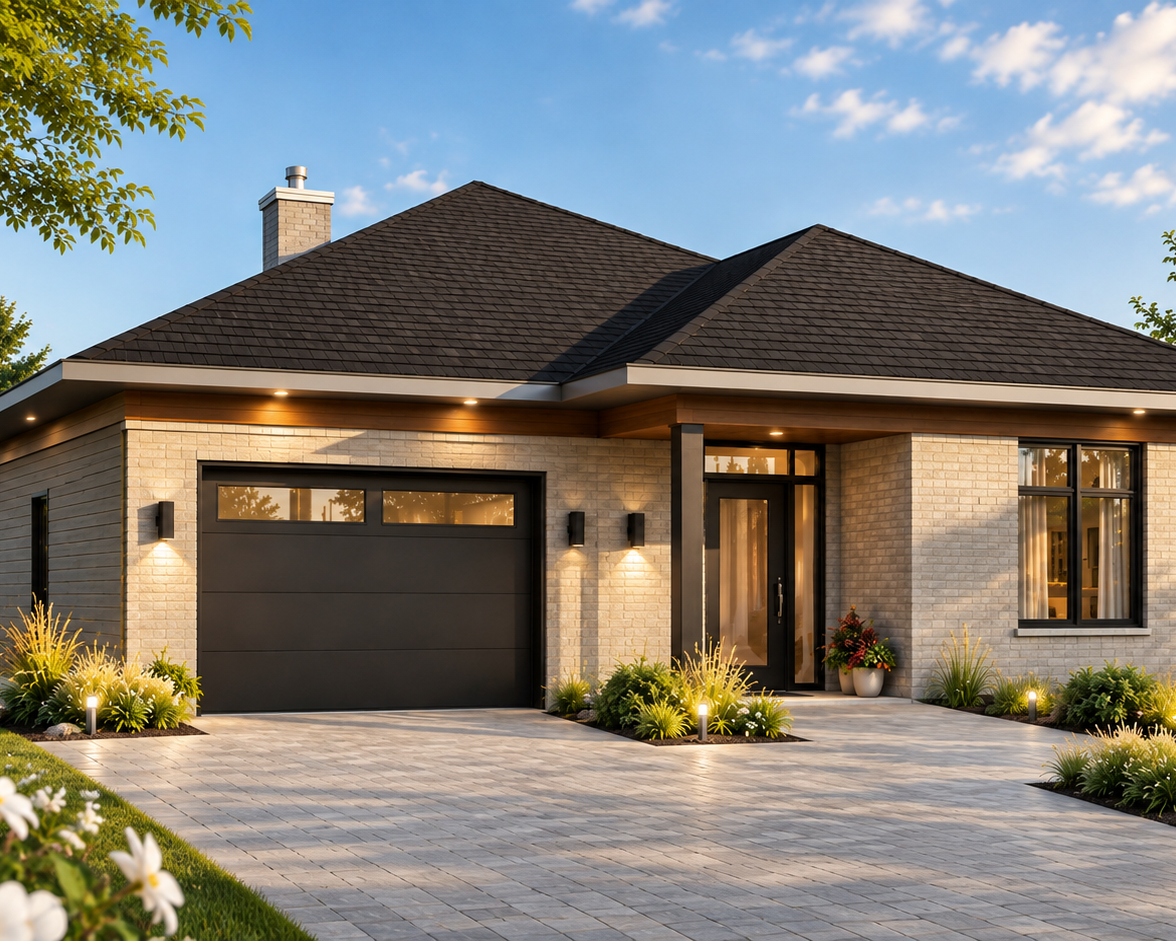
Dark-colored homes have been part of the architectural landscape for quite some time, and their popularity shows no signs of fading — quite the opposite. Black, charcoal, anthracite and deep brown are no longer reserved for contemporary homes: farmhouse, cottage, Scandinavian and even more traditional architecture are embracing darker palettes.
Why the appeal? Because a dark exterior commands attention while, surprisingly, often blending beautifully into its surroundings. It emphasizes architectural volumes, makes wood, stone and windows stand out, and instantly gives the exterior more character.
But while the black house may feel decidedly current, the idea itself is anything but new.
And today, dark exterior house plans can be found across virtually every architectural style, from modern farmhouse and Scandinavian homes to cottages and more traditional designs.
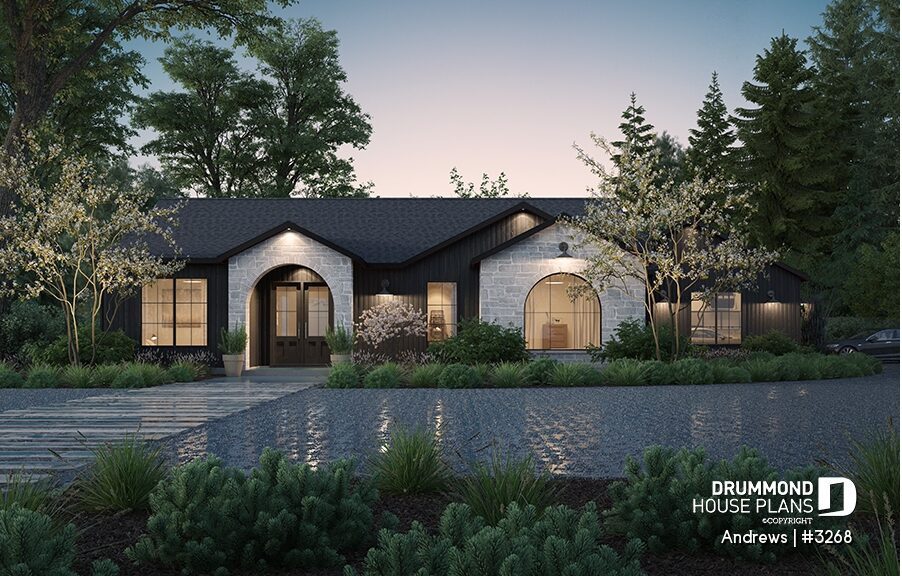
Is the Black House Really a New Trend?
Not exactly.
Long before dark exteriors became an iconic feature of contemporary architecture, they were already present in various architectural traditions.
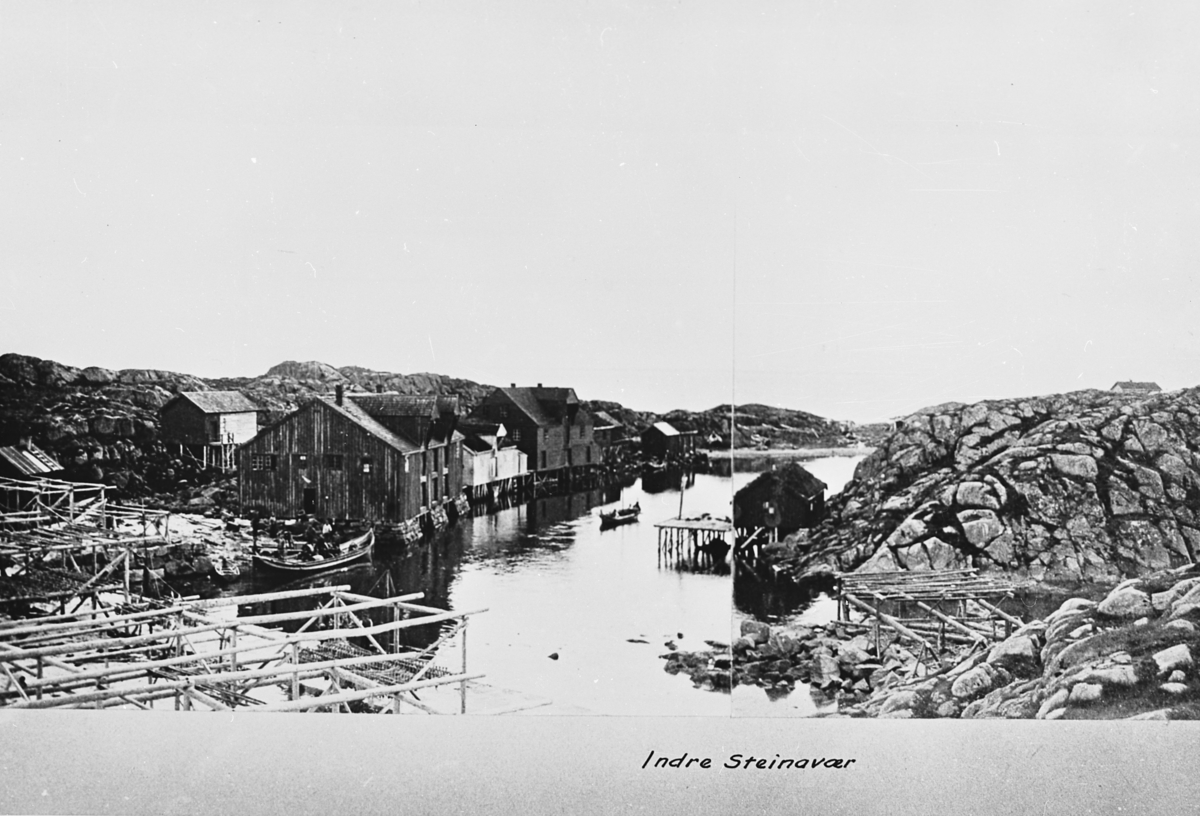
In Scandinavia, particularly in Norway, wood has been at the heart of architecture for more than a thousand years. Abundant and widely used to build homes, farm buildings and structures in fishing villages, wood also needed protection from the elements.Wood tar, among the treatments traditionally used for this purpose, naturally gave surfaces a very dark appearance. In fishing villages exposed to the harsh Nordic climate, dark exteriors were therefore practical long before they became an aesthetic inspiration.
In Japan, another centuries-old tradition helps explain the presence of nearly black exteriors. Yakisugi involves charring the surface of wood to create a protective layer and improve its durability. The black color that is so sought after today for its appearance was originally closely tied to preserving the material.
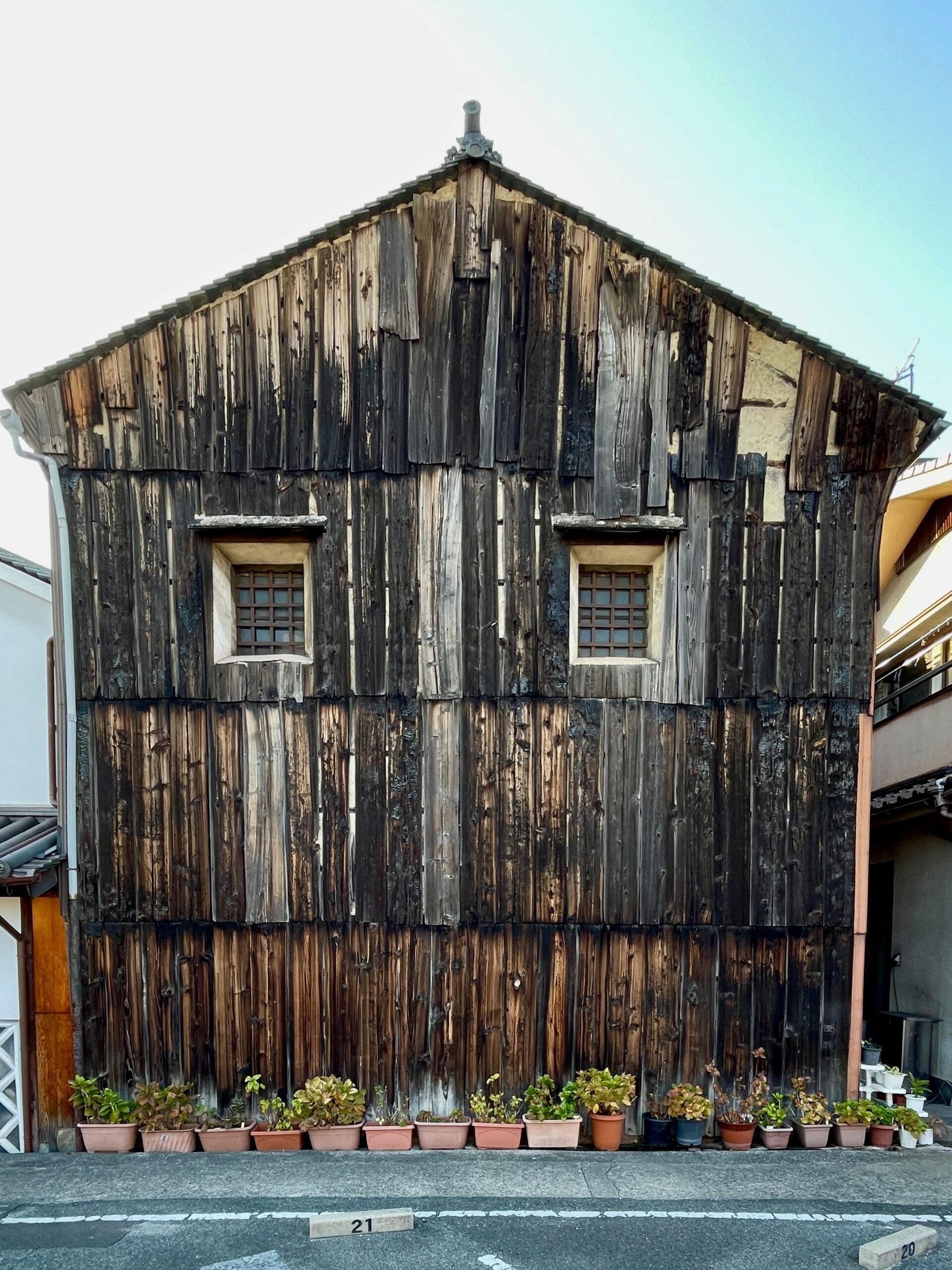
From Norway to Japan, dark exteriors have deep practical roots. Centuries later, these techniques and their distinctive aesthetic continue to inspire contemporary residential architecture.
In other words, dark architecture wasn’t born with Instagram or the modern farmhouse. What is new is its spectacular comeback — and especially how widely it has been embraced.
From Black Windows to Dark Exteriors: The Recent Evolution in North America
In North America, the recent story of dark homes began in the details. Before fully dark exteriors started appearing throughout our neighborhoods, black windows helped pave the way. Black and anthracite frames created striking contrasts against white and light-colored exteriors, a combination that became particularly emblematic of the modern farmhouse.
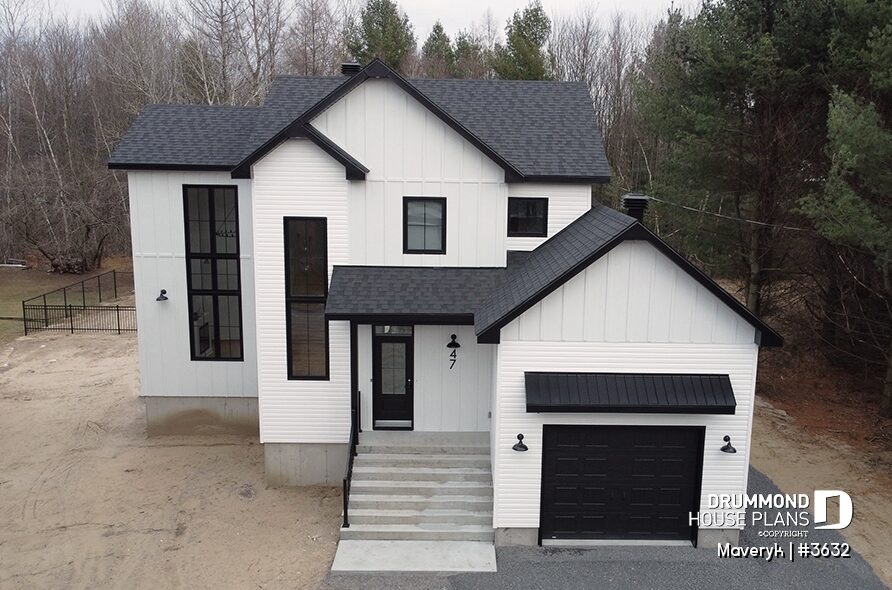
That contrast quickly spread to many other home styles. On the extremely popular Barrington 4 #3153-V3, dark windows and doors punctuate a more traditional white exterior and give it a decidedly current look.
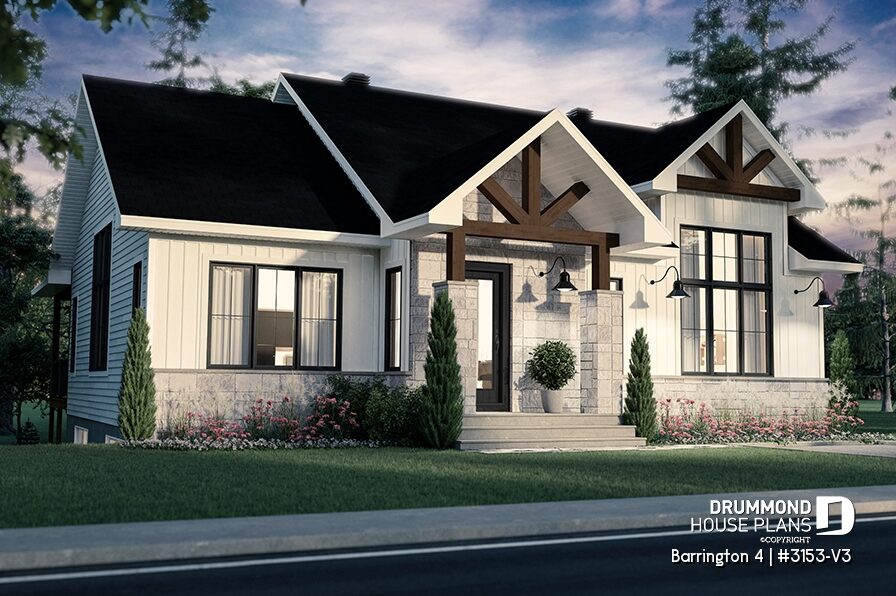
👉 Love this architecture? Explore the Barrington house plan collection, available in several versions.
Gradually, darker shades took over more of the exterior. From window frames, they moved to doors, soffits and roofing details, then to increasingly large sections of siding. Today, homeowners are going much further, embracing completely black, charcoal or deep brown exteriors — sometimes with an almost monochromatic approach.
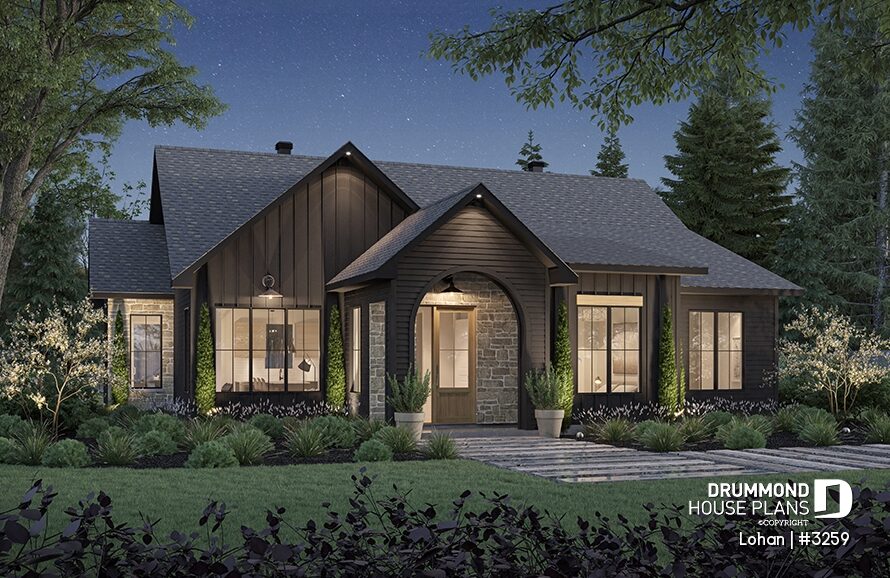
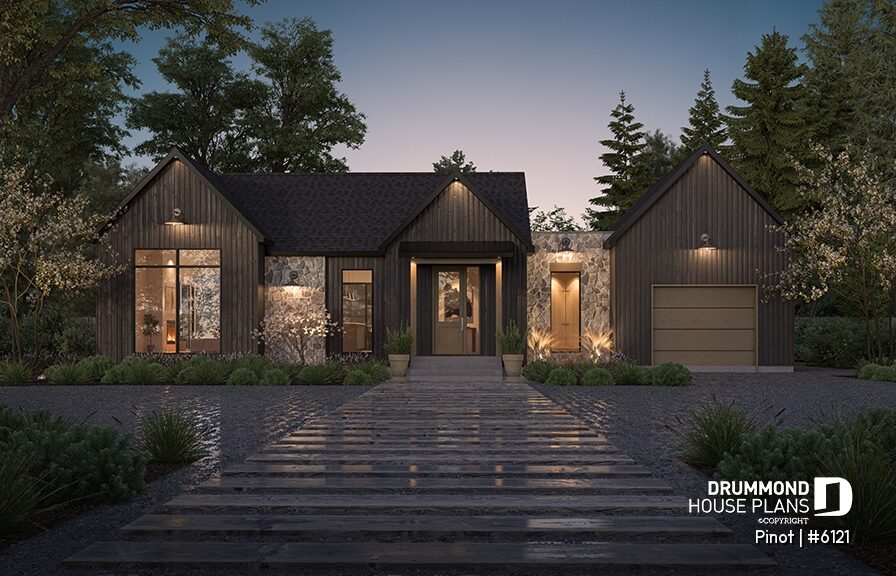
The materials themselves — and the ways we combine them — have also evolved tremendously. Natural wood, stone, expansive glazing, metal and vertical siding now make it possible to create dark exteriors that feel much more layered and warm.
Most importantly, dark exteriors no longer belong to a single architectural style.
Farmhouse Goes From White to Dark
Modern farmhouse architecture has long been associated with an almost iconic combination: white siding, black windows and a dark roof. But in recent years, the style has begun exploring a much deeper palette.
👉 Love this style? Discover why farmhouse house plans continue to appeal to so many families and how this architecture has evolved over time.
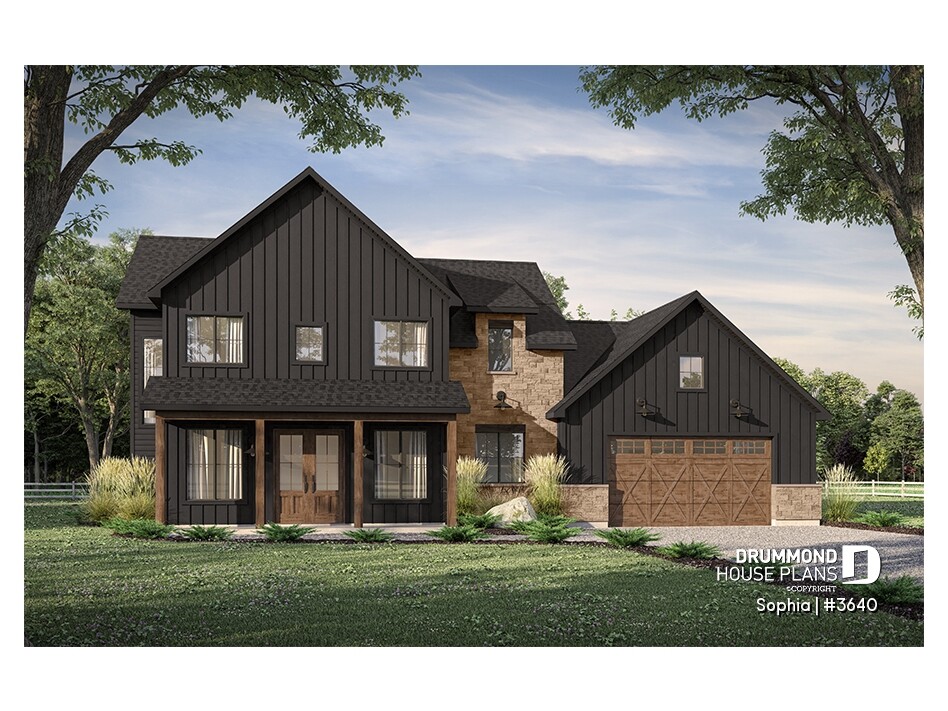
The familiar white exterior is giving way to charcoal, black and deep brown, without sacrificing the farmhouse DNA. Gables, porches, vertical siding, simple volumes and details inspired by rural architecture remain, but changing the color palette completely transforms the character of the home.
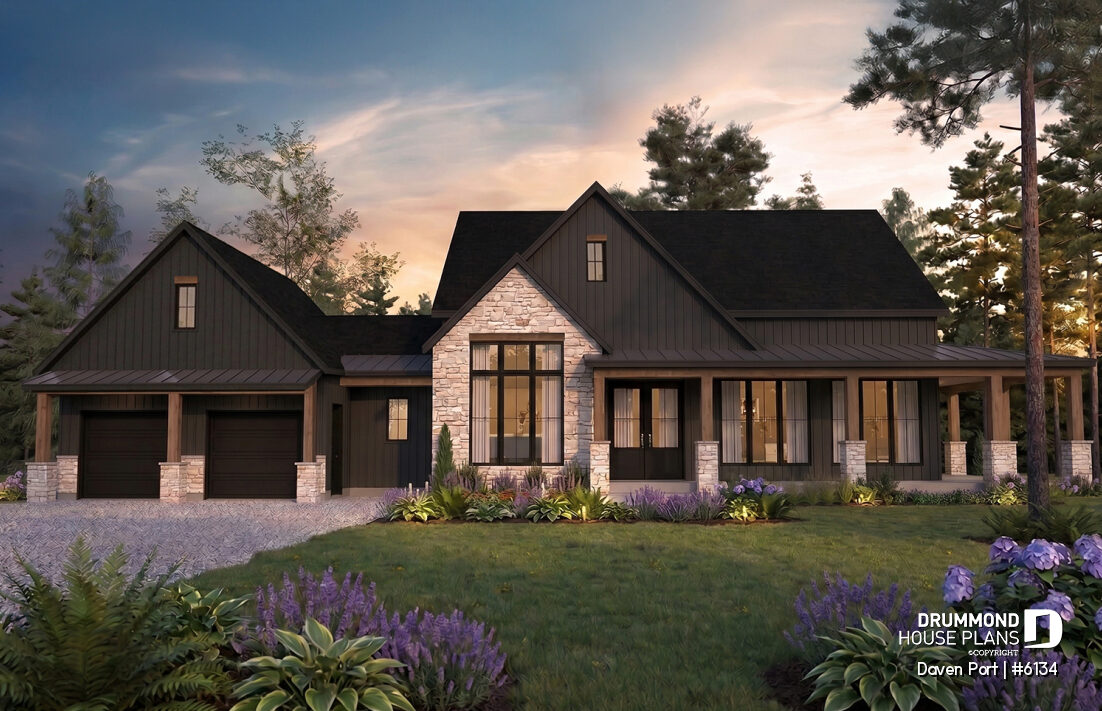
Natural wood and light-colored stone then play an important role, warming up the deeper tones, adding dimension and preventing a dark exterior from feeling too austere.
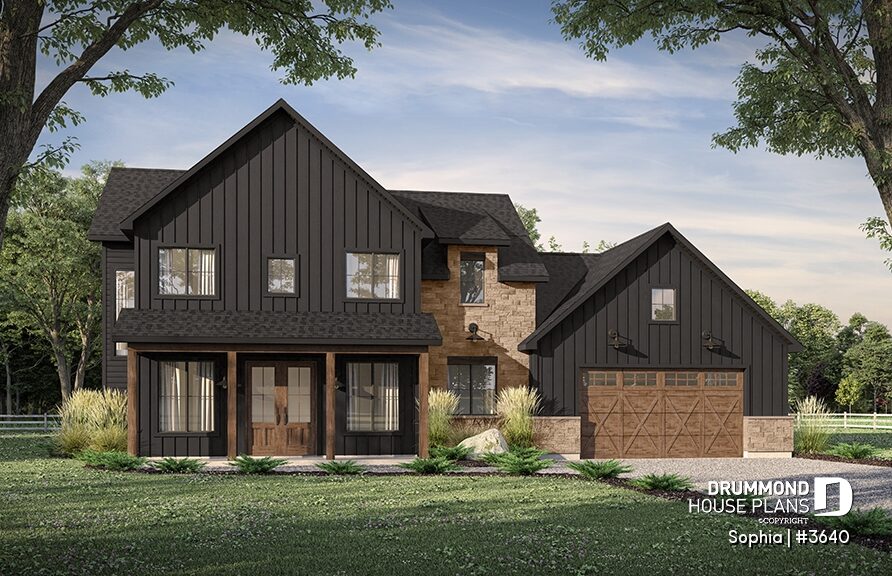
Sophia #3640 takes the combination even further, pairing charcoal with wood and stone to retain all the warmth associated with farmhouse architecture.
Dark Cottages Blend Into the Landscape
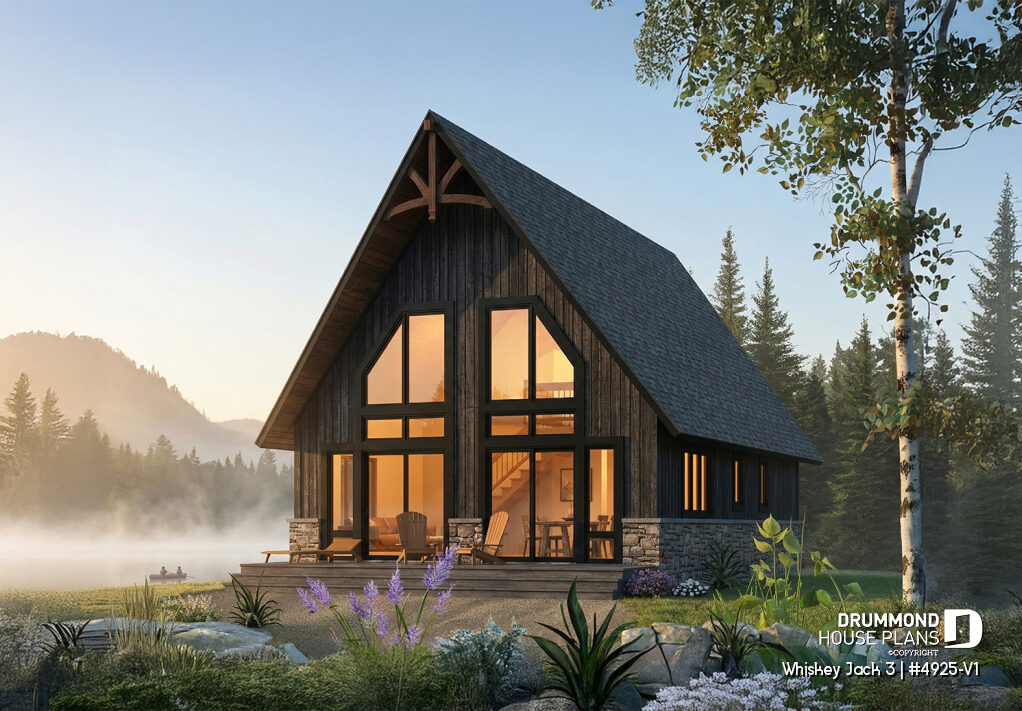
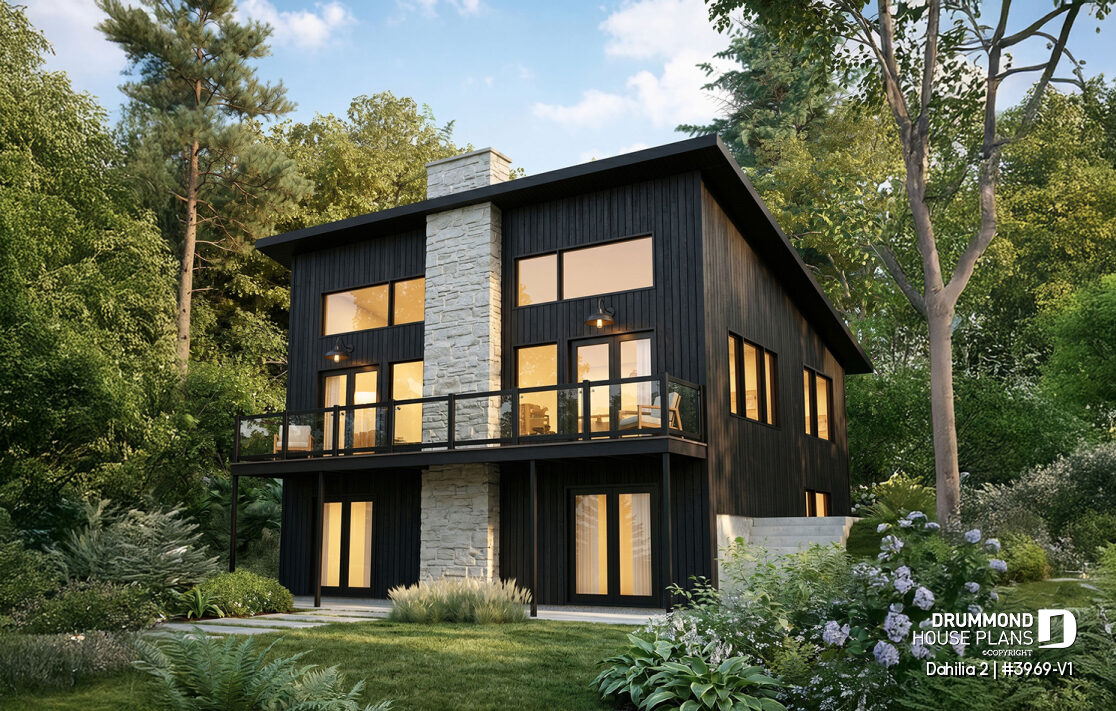
In a forest or mountain setting, a dark exterior creates an entirely different effect.
Rather than dominating its surroundings, the building can visually blend into the trees and shadows of the landscape. Black, charcoal, deep brown and even certain very dark greens work especially well when paired with natural wood and expansive glazing.
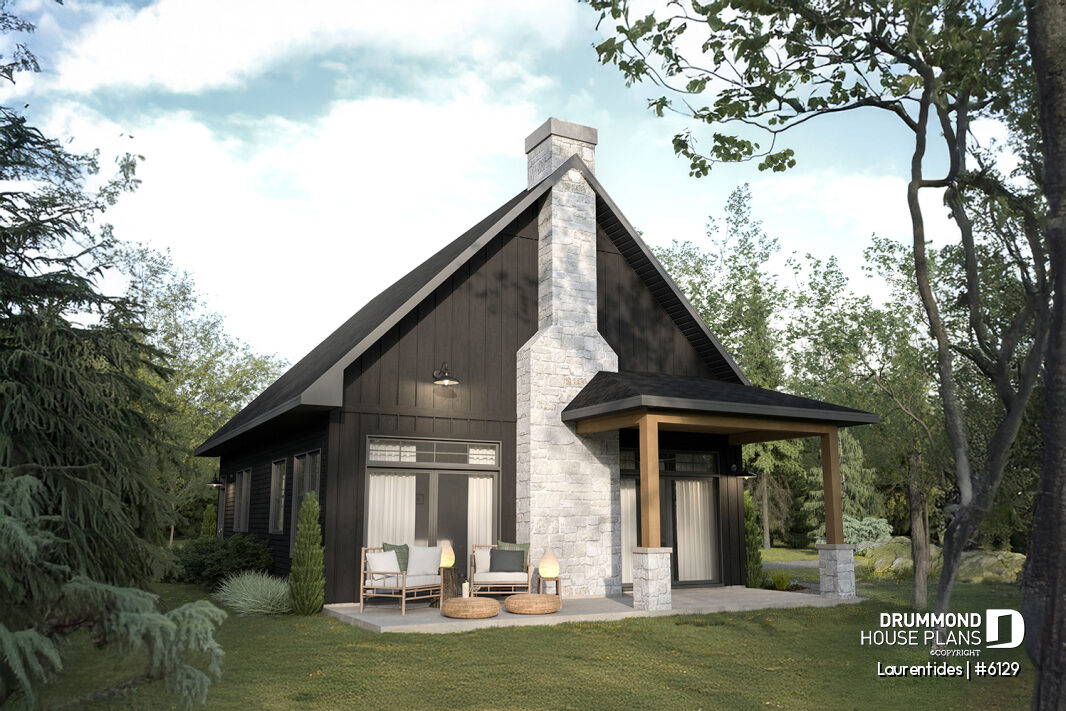
That is probably one of the reasons this palette feels so natural in cottage architecture.
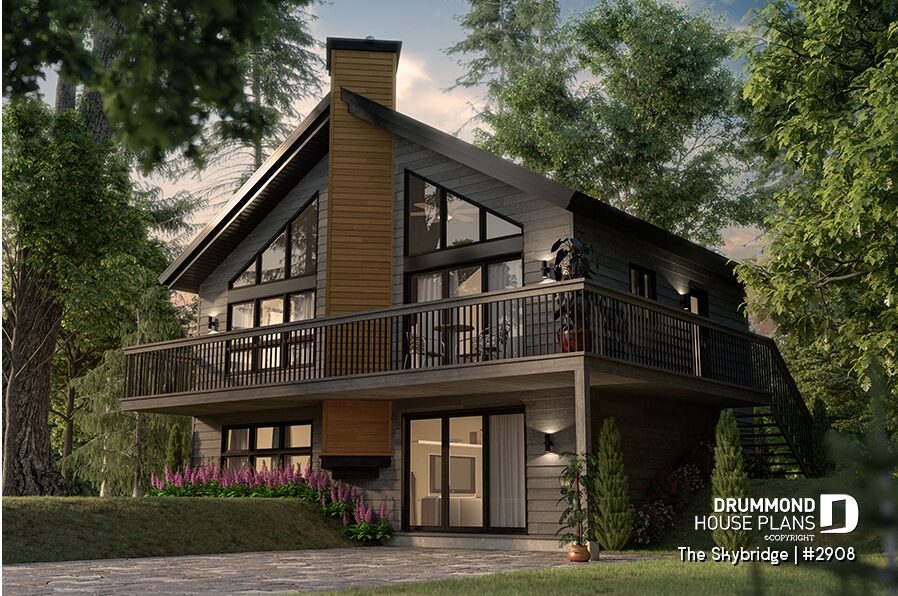
With expansive windows, dark colors also create a beautiful contrast with natural light and the surrounding landscape. And this approach isn’t limited to a single interpretation of cottage architecture: from more traditional silhouettes to contemporary lines, deep colors seem to find their place naturally.
Scandinavian Style: Where Dark Colors Feel Almost Natural
If there is one style we instinctively associate with dark-colored homes today, it is Scandinavian architecture.
Clean volumes, gable roofs, minimalist detailing, wood and large openings lend themselves particularly well to matte black and charcoal gray.
The contrast between a dark exterior, light-colored stone and touches of natural wood has become an especially strong signature of this architecture.
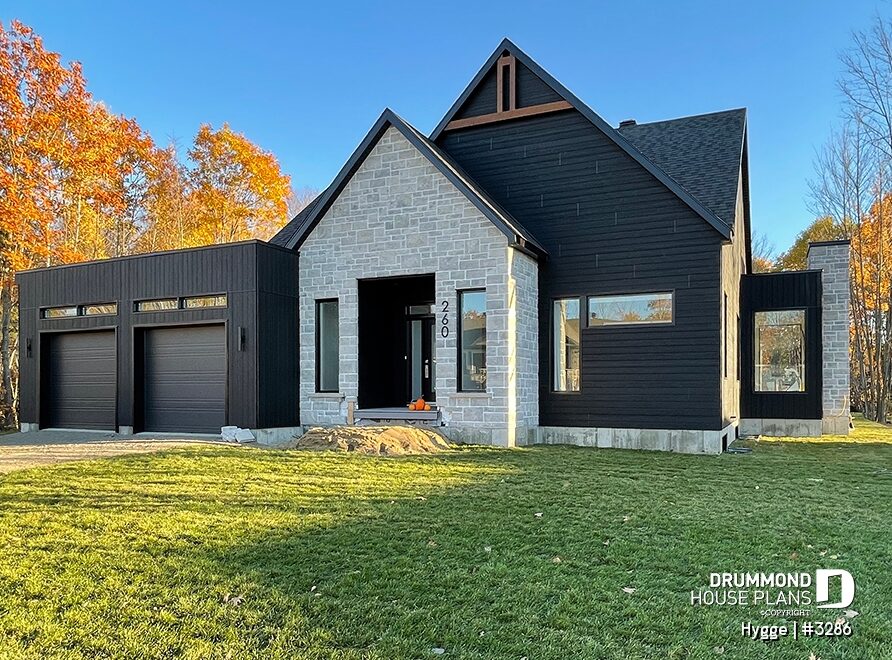
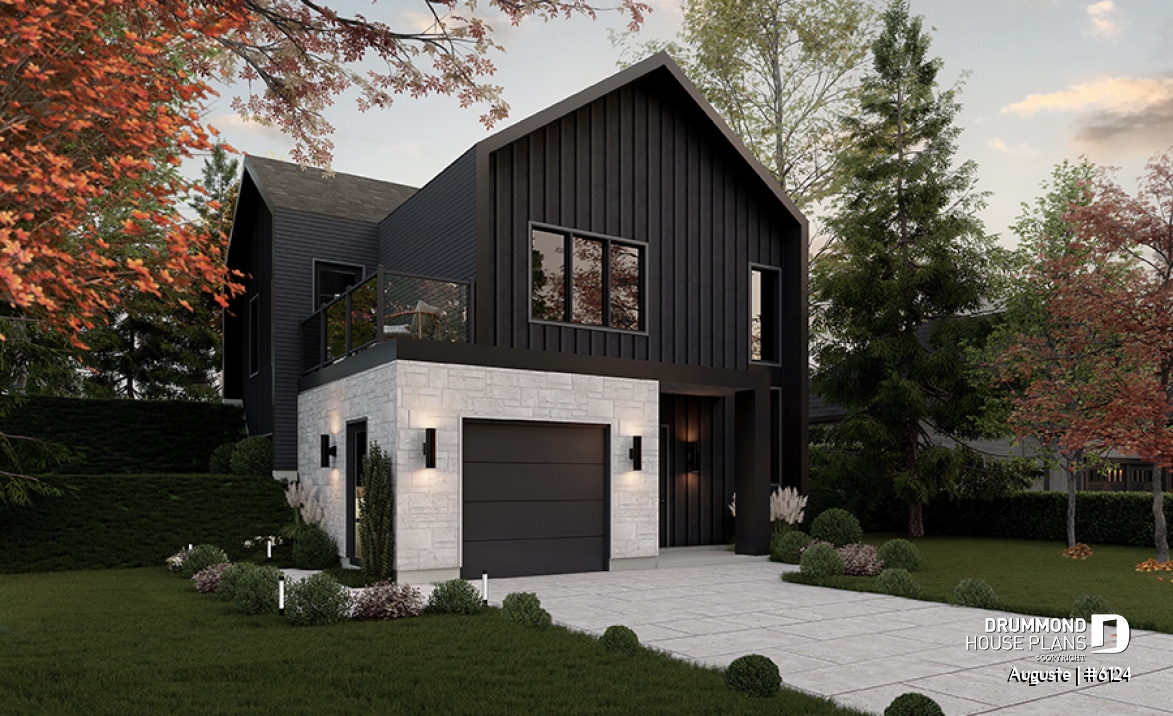
Scandinavian architecture can also take the monochromatic look much further. With Auguste #6124, black envelops nearly all of the home’s clean volumes, while light masonry creates a graphic contrast that highlights its geometry.
And Why Not a More Traditional Home?
This may be where the trend becomes most surprising. Dark colors are not reserved for contemporary homes, cottages or Scandinavian architecture. They can also completely refresh a home with more traditional lines.
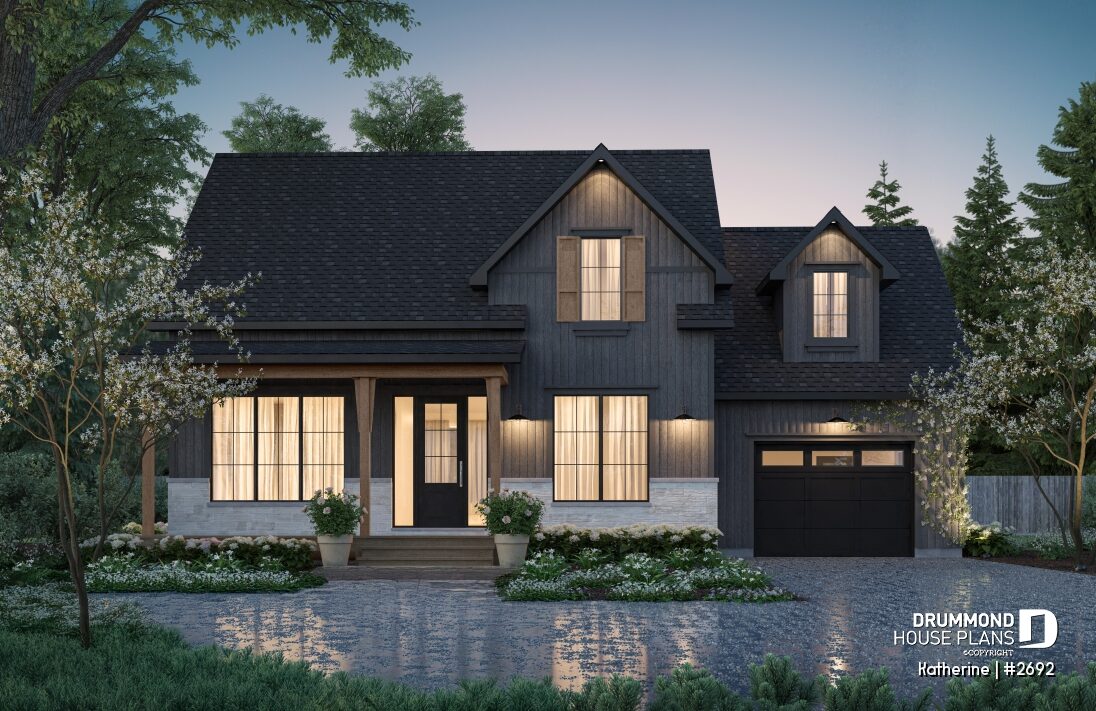
Katherine #2692 is a great example. With its gable roof, dormers, divided-light windows and shutters, it incorporates several hallmarks of traditional residential architecture. Its charcoal gray exterior, however, gives it a much more current look.
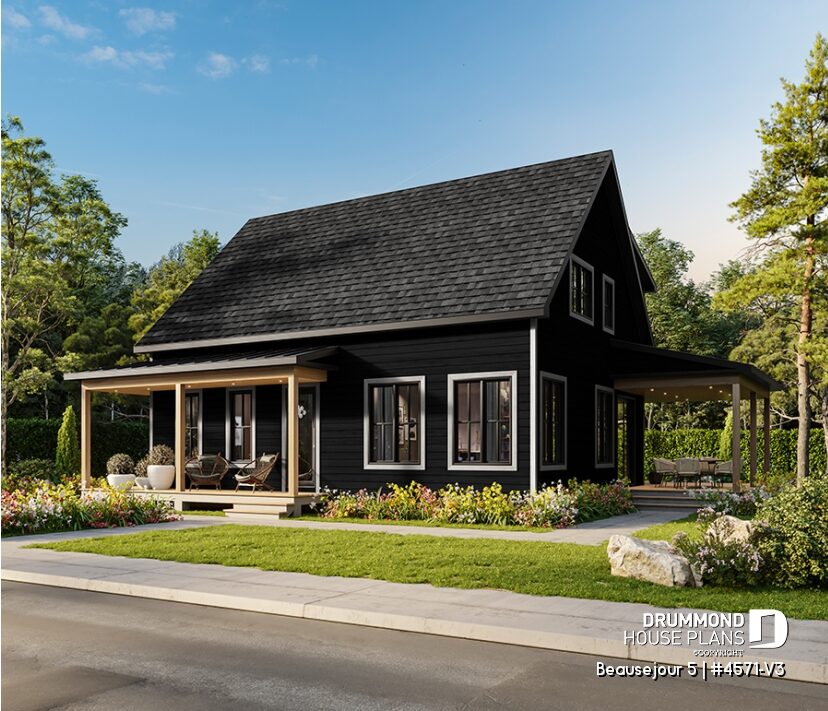
With Beausejour 5 #4571-V3, the contrast goes even further. Its simple silhouette, divided-light windows and large covered porch recall an architectural style deeply rooted in our residential landscape. Yet its almost entirely black exterior gives it a decidedly current personality.
A few natural wood accents warm up the composition without diminishing the desired effect. The home retains all the charm of its traditional architecture, but with a much bolder personality.
Proof that a dark home doesn’t need to be modern to be spectacular.
Black, Charcoal, Anthracite… Dark Doesn’t Necessarily Mean Black
It’s an important distinction.
A home can achieve all the architectural impact of a dark exterior without being entirely black. Charcoal gray, anthracite, deep brown, navy and even certain forest greens can create that same sense of depth.
These shades also interact beautifully with changing light. Depending on the time of day, season and surroundings, a charcoal exterior can appear almost black, then reveal far more nuance in full sunlight.
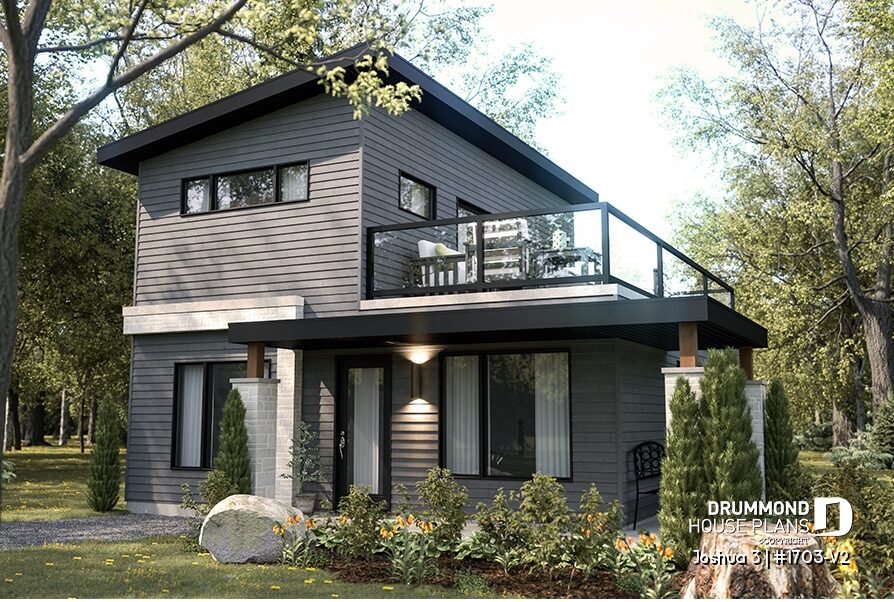
Dark green offers another way to embrace the trend. Deep and natural, it can create almost the same visual impact as charcoal while revealing much more color in the light.
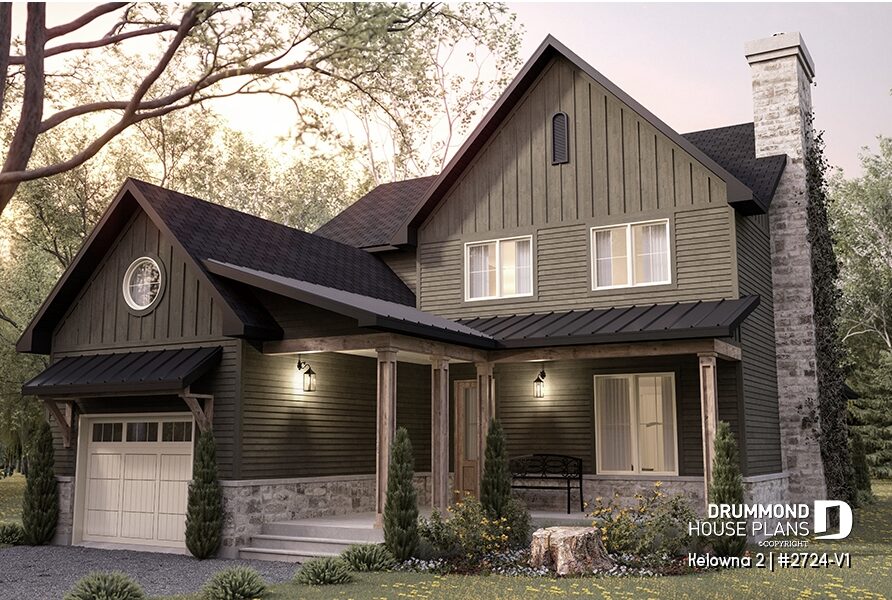
The secret is often in the combinations: dark colors with natural wood, dark colors with stone, dark colors with expansive glazing.
“What I love about the way dark exteriors are evolving is that it’s no longer just about black. We’re seeing more charcoal, deep browns and rich dark greens, often paired with natural wood or stone. To me, the most successful dark exteriors are those that play with texture and contrast — that’s what creates depth and keeps the overall look from feeling too uniform.”
— Jennifer Larocque, Art Director, Drummond House Plans
Why Do Black and Wood Work So Well Together?
Because they almost do the opposite of one another.
Black brings depth, contrast and character. Wood brings warmth, texture and a natural element. Together, they create a balance that allows even very dark exteriors to remain inviting.
A wood door, soffit, section of siding or even a few carefully placed details may be enough to warm up the composition. Wood can also draw attention to a specific architectural feature, such as the entrance or porch.
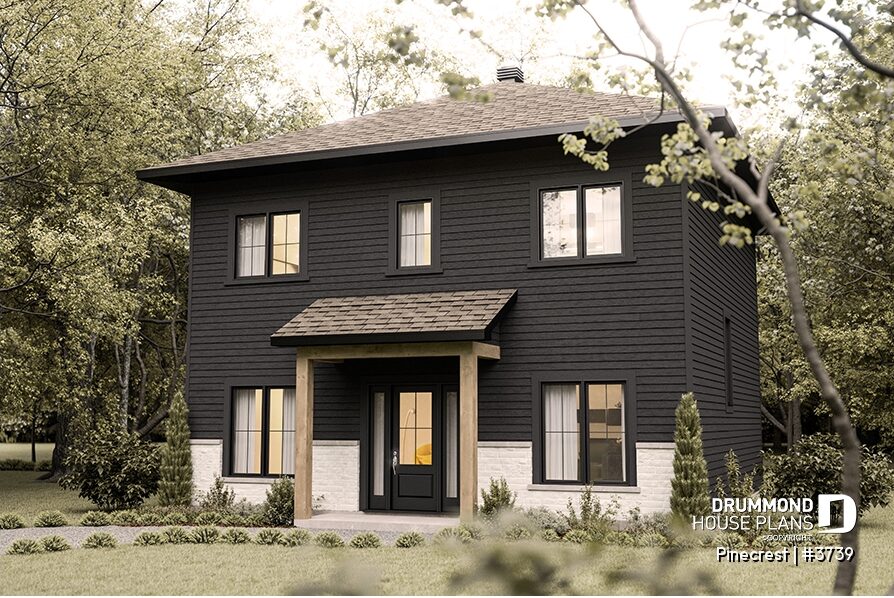
On Pinecrest #3739, the contrast is especially striking: the small natural wood porch instantly becomes the focal point of an almost entirely black exterior.
On Ripley 3, the same principle becomes even more pronounced: the wood at the entrance and in the porch structure adds warmth and dimension to the dark exterior.
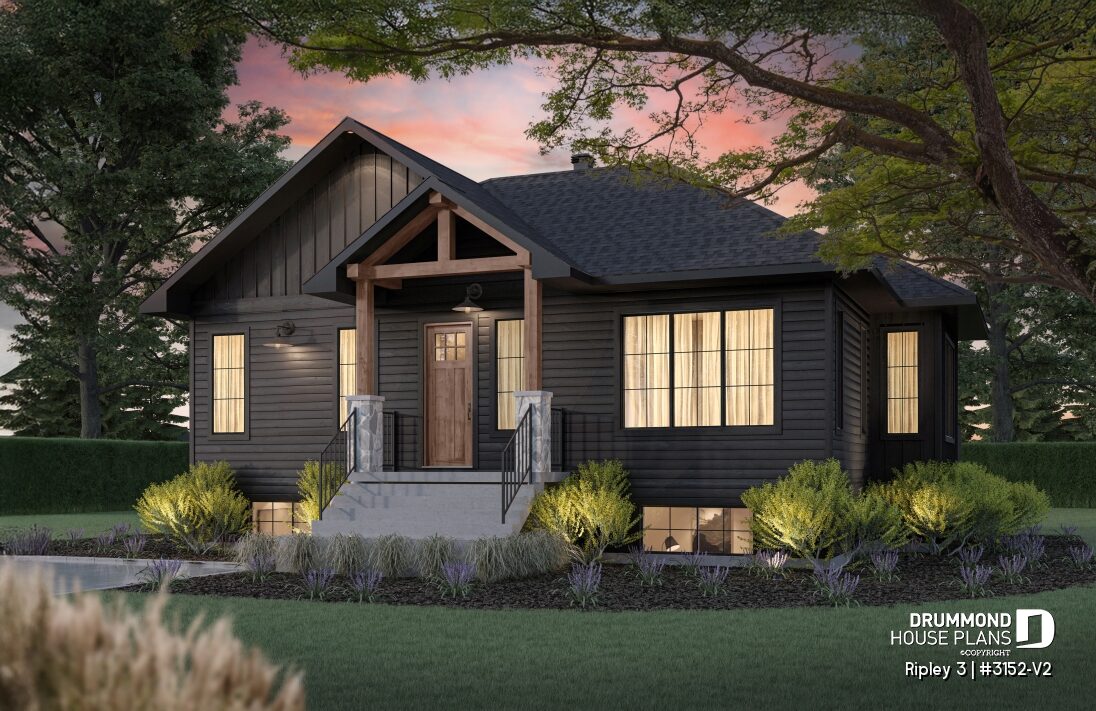
In both cases, the wood naturally draws the eye toward the entrance, while the dark exterior acts almost like a backdrop.
Dark Colors Go Beyond the Single-Family Home
The trend extends well beyond single-family homes. Semi-detached homes, multigenerational homes and even garages are embracing deeper palettes, showing just how easily dark colors can adapt to different types of buildings and uses.
On a semi-detached home, the contrast between light and dark can even become part of the architectural composition, helping visually distinguish different volumes. On a multigenerational home, a dark palette can give a strong, current identity to an architecture designed to accommodate several generations.
And why stop at the house? Even a detached garage can gain tremendous character from dark siding warmed up with natural wood.
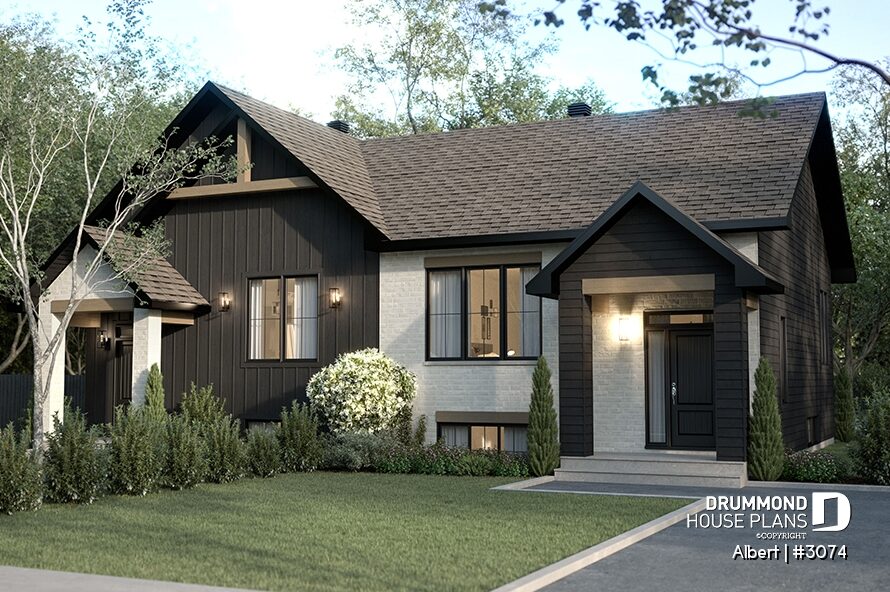
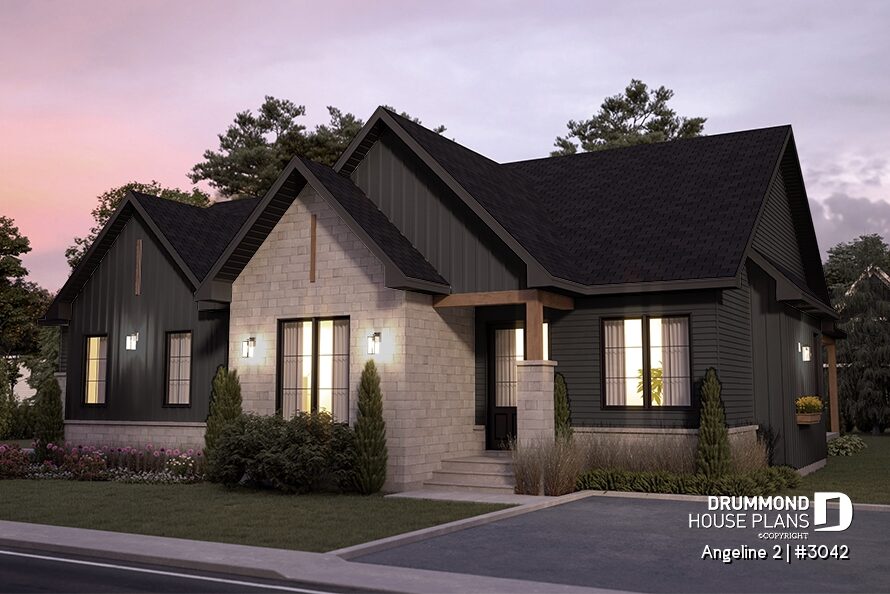
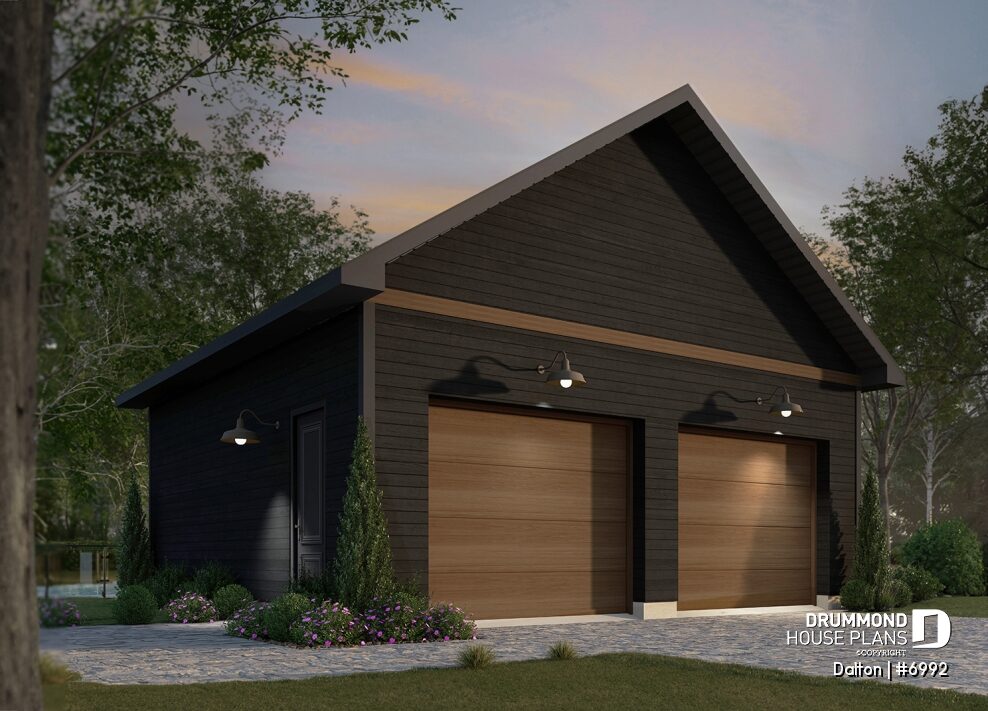
From semi-detached and multigenerational homes to detached garages, dark palettes now extend far beyond the single-family home: they have become an architectural language in their own right.
Does a Dark House Get Hotter in the Sun?
It’s a legitimate consideration.
Very dark surfaces absorb more solar radiation than lighter ones. Depending on the material, orientation and exposure, a very dark color can therefore result in higher surface temperatures.
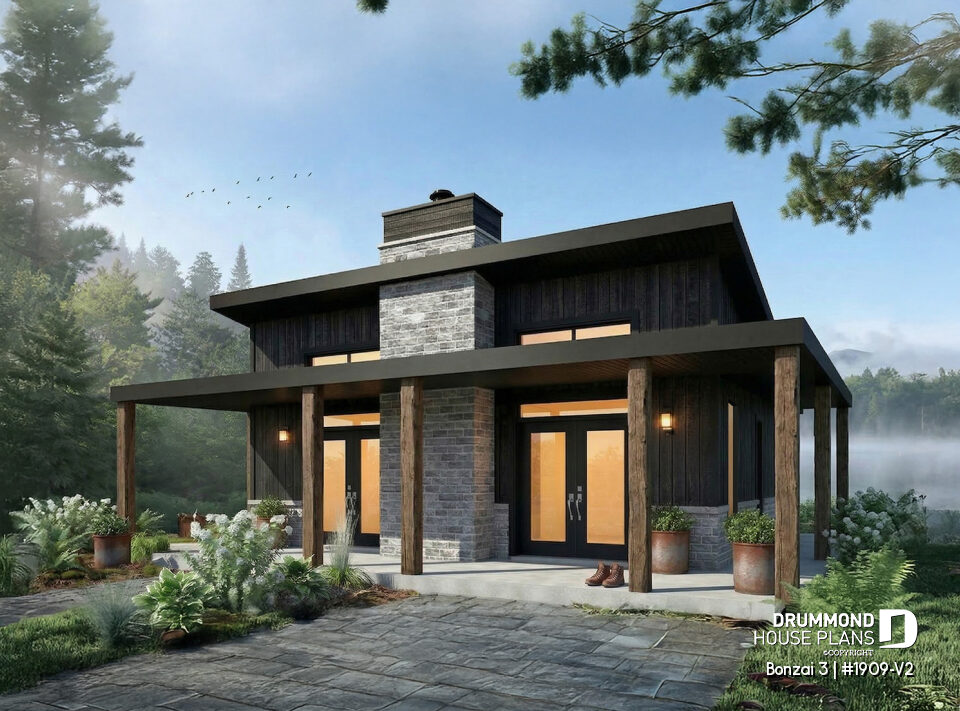
That doesn’t mean you should avoid black. Rather, the siding material and finish should be selected with the desired color in mind. Manufacturer recommendations regarding dark colors, installation and maintenance are particularly important.
👉 Love the character of dark exteriors? Explore the Bonzai collection and the different models available in this series.
A Dark Exterior Can Also Transform an Existing Home
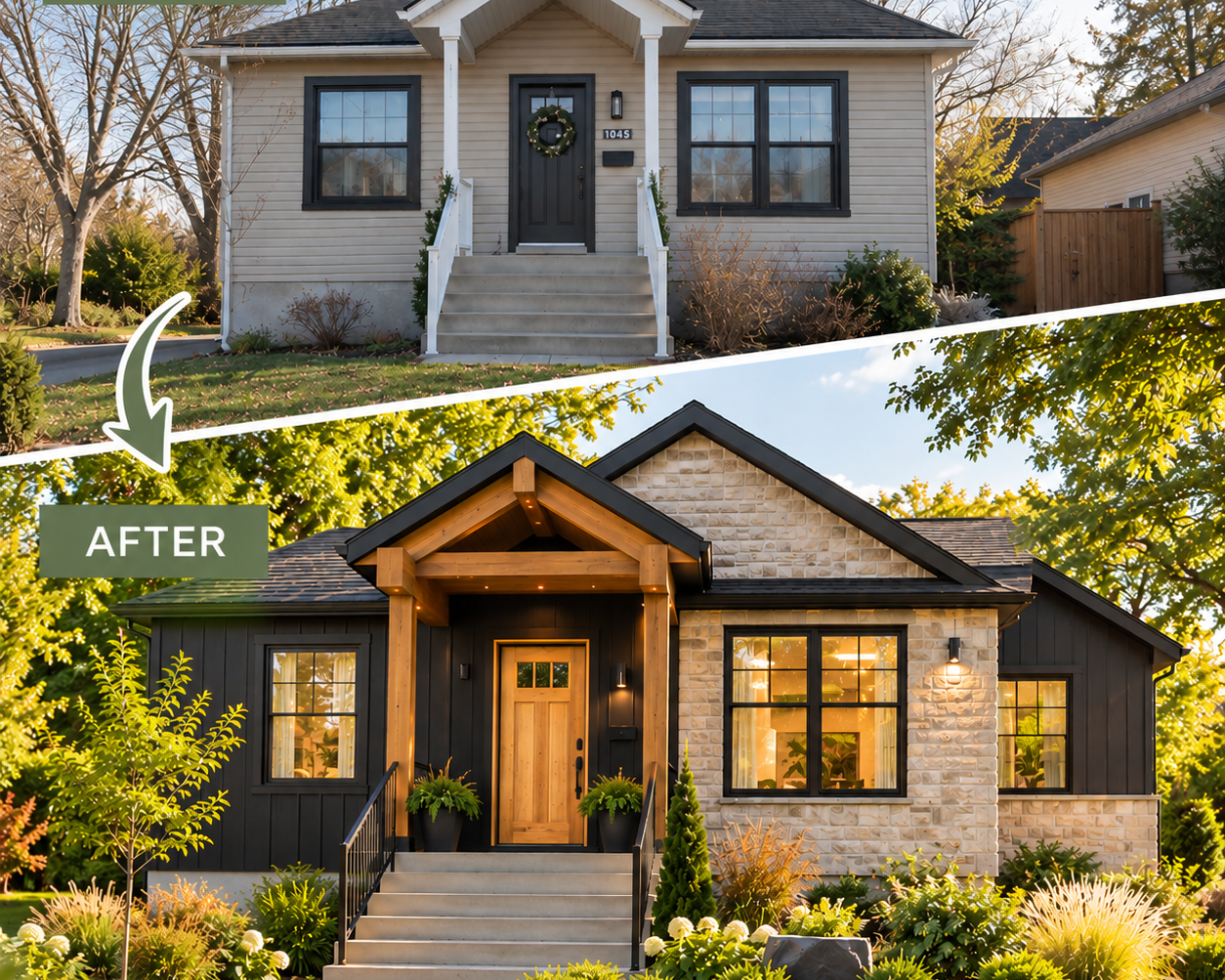
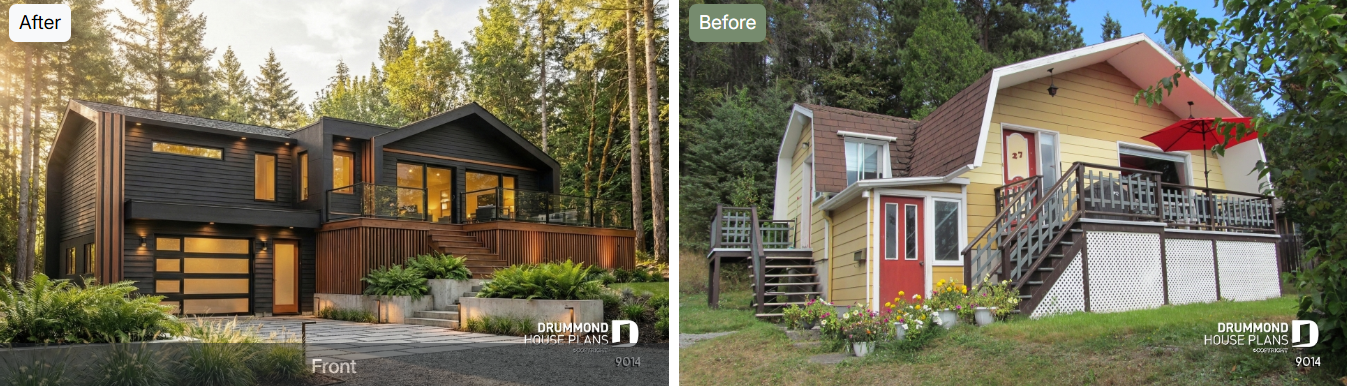
Embracing a dark exterior doesn’t necessarily mean building a new home. In a renovation project, changing the materials, windows and exterior color palette can completely transform the character of an existing house.
This project is a spectacular example. The original home was redesigned with a much more current architectural expression, a dark exterior, new openings and wood accents that warm up the overall composition.
A transformation of this scale obviously goes far beyond simply changing the color. Volumes, openings, materials, additions and architectural details all need to be considered together to create a cohesive result.
👉 Thinking about transforming your home? Our architectural technologists can design your renovation or addition plans, whether you want to rethink the exterior, modify openings, expand your home or completely redesign its architecture. With 30 offices across Quebec and Ontario, as well as online services available wherever you are, Drummond House Plans can support your renovation project from wherever you call home.
Dark Colors Are Also Making Their Mark on Custom Homes
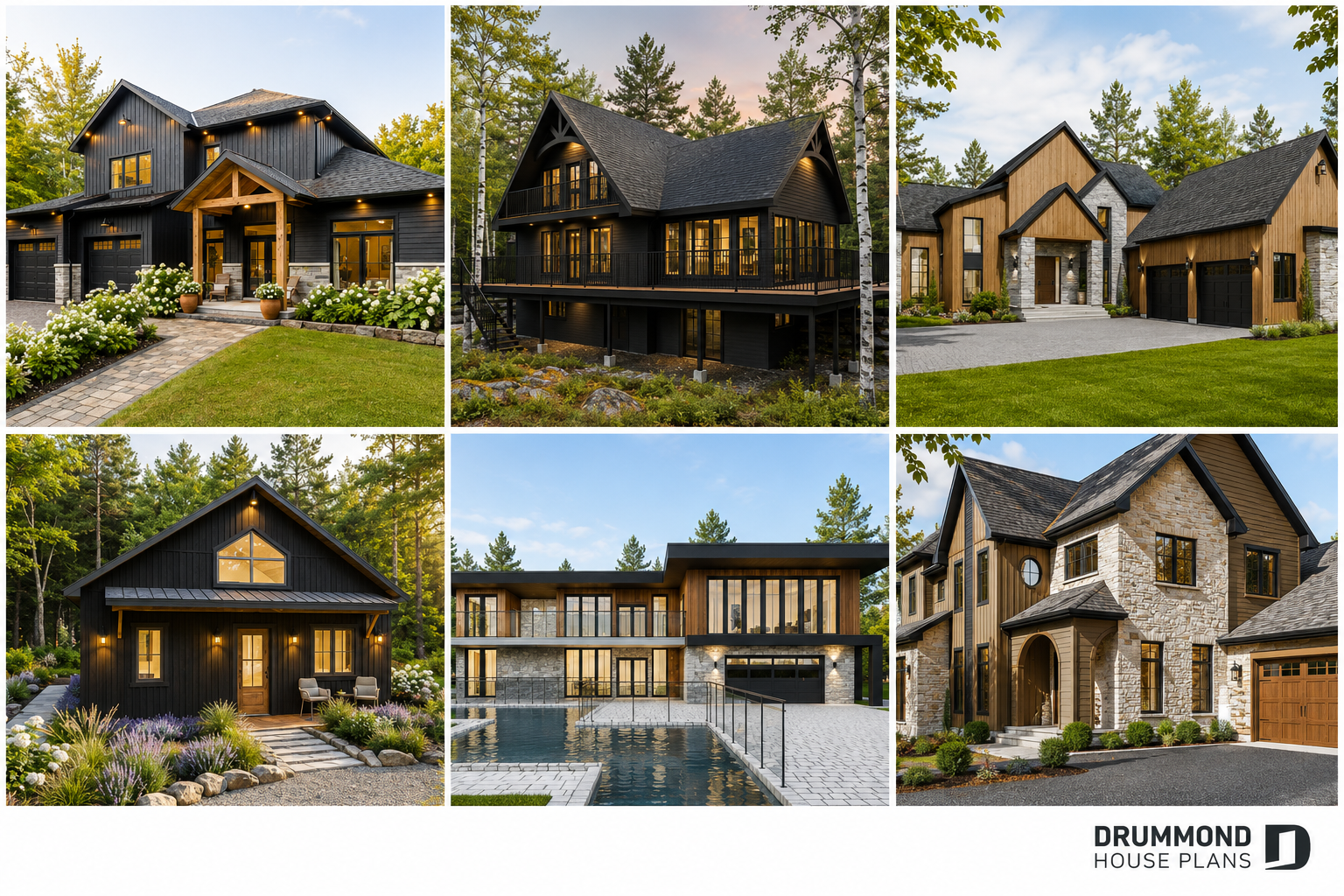
The custom homes we design reflect the same enthusiasm for deeper palettes. Farmhouse-inspired homes, cottages, contemporary architecture and more traditional residences: dark colors are now appearing across an incredibly diverse range of styles.
These six Drummond House Plans projects make the point beautifully: black, charcoal, deep brown and dark wood do not dictate an architectural style. Instead, they become a way to give character to architecture designed around each client’s tastes, lot and lifestyle.
👉 Have a very specific home in mind? Our architectural technologists can create a custom house plan tailored to your lot, your needs and your style.
A Trend That’s Here to Stay?
It’s impossible to predict exactly which colors will dominate our neighborhoods ten or twenty years from now.
But history tells us something interesting: dark buildings existed long before today’s trend.
What is evolving is the way we interpret them.
Black is no longer exclusively contemporary. Charcoal is no longer reserved for cottages. Farmhouse architecture no longer has to be white. And even classic architecture can become spectacular when a deeper palette is embraced.
At Drummond House Plans, this freedom opens up countless possibilities: the same architectural style can tell a completely different story depending on the materials and colors that dress its exterior.
Exterior architecture matters, of course, but the right home design should first and foremost suit your property, budget and lifestyle.
👉 Discover how to choose the right house plan for your project.
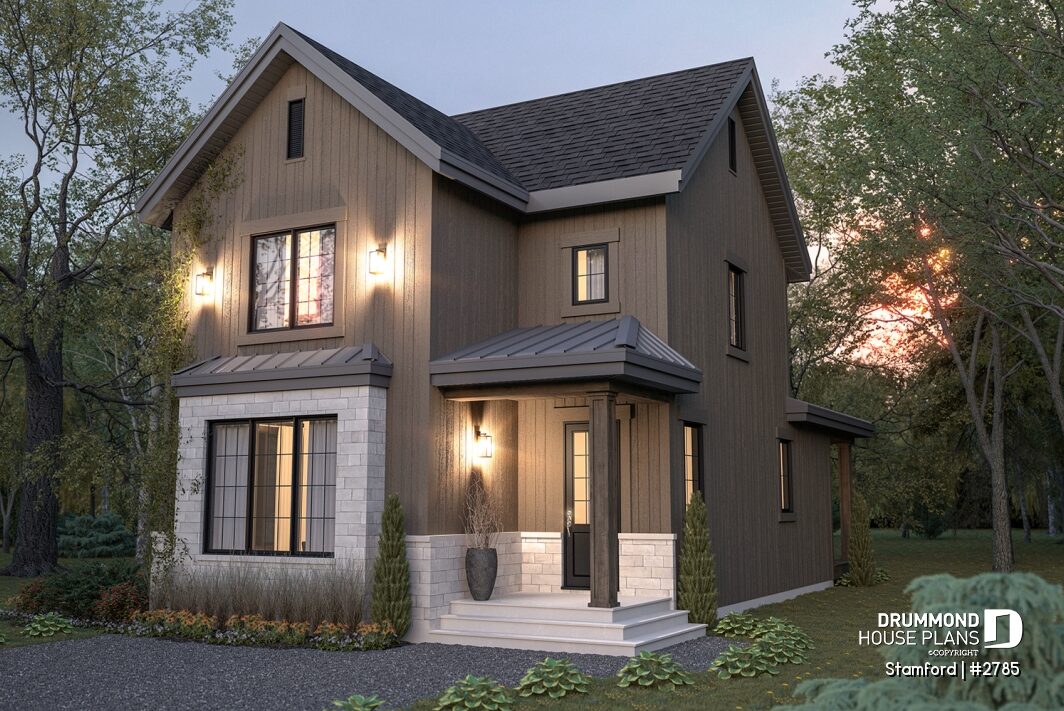
And what if the dark exteriors appearing throughout our neighborhoods today are less of a passing trend and more of a new way to embrace color in residential architecture?