

How to Renovate Your Home More Sustainably Without Sacrificing Comfort
A green home renovation can improve your home while reducing its environmental impact. However, sustainability involves much more than choosing eco-friendly materials.
Good planning can help you reuse existing elements, improve energy efficiency, reduce waste, and make better long-term choices. In addition, a sustainable home renovation should consider how your needs may change over time. This approach can help prevent unnecessary renovations later.
Here are 10 practical tips for planning a greener, more sustainable home renovation.
1. Start With a Clear Renovation Plan
Before choosing materials or finishes, take time to define your priorities. First, identify what you truly need to change.
Consider the home’s layout, comfort, energy performance, available space, and long-term needs. Then, determine which improvements will provide lasting value.
A clear plan can also help you avoid unnecessary work. Therefore, you can focus your budget on improvements that support your renovation goals.
For larger projects, planning becomes even more important. Structural changes, additions, and major layout modifications often require careful coordination.
2. Keep, Reuse, and Donate What Still Has Value
A sustainable renovation does not mean replacing everything. Instead, start by identifying materials and features that still have value.
When possible, keep, repair, or incorporate existing elements into the new design. These may include flooring, doors, cabinets, woodwork, lighting, hardware, and other components.
When something must come out, consider deconstructing carefully instead of simply throwing it away. Doors, cabinets, sinks, lumber, and finishing materials may still have years of useful life.
Therefore, you may be able to reuse, donate, or pass these materials along to someone else.
This approach can reduce renovation waste and extend the useful life of existing materials. At the same time, those materials may help someone complete another project.
3. Use the Renovation to Improve the Building Envelope
During a major renovation, consider the energy performance of your home’s building envelope. Better insulation and air sealing can improve comfort while reducing energy loss.
Depending on the home and project, consider evaluating:
- insulation;
- air sealing;
- doors and windows;
- the roof;
- exterior walls;
- the foundation.
These components can affect the home’s comfort, energy efficiency, and long-term durability.
Moreover, renovations sometimes expose walls, roofs, and other building components. Therefore, this may be an ideal time to make worthwhile improvements.
👉 Learn more about the principles behind an energy-efficient home and the features that can improve its overall performance.
4. Make the Most of Natural Light
A renovation offers a great opportunity to rethink windows and interior spaces. Therefore, consider how you can bring in more natural light.
Window placement, room orientation, and interior layouts can greatly influence brightness. They can also improve the home’s comfort throughout the day.
For example, you may enlarge an opening or change the layout of a room. You could also create a brighter, more open living space.
These changes can improve comfort without significantly increasing the home’s footprint.
5. Rethink Existing Spaces Before Adding More
Before building an addition, consider whether you can use the existing space more efficiently.
For example, you might open a closed kitchen to the dining room. A rarely used room could also serve a new purpose.
In addition, improving circulation can make the entire home feel more functional. Sometimes, a better layout provides the extra space you thought you needed.
However, the existing footprint cannot solve every space problem. When your home truly needs more room, a well-planned addition may be the right solution.
6. Choose Durable Materials That Suit Their Purpose
A material’s durability matters just as much as its appearance. Choosing the right product can help prevent premature replacement.
For flooring, countertops, exterior finishes, and other high-use surfaces, choose durable materials designed for their intended purpose.
Depending on your project, consider materials that:
- contain renewable or recycled resources;
- come from local sources when possible;
- have low volatile organic compound (VOC) emissions;
- are easy to maintain and repair;
- offer a long service life.
A material that requires frequent replacement may not be the most sustainable choice. Therefore, consider both its initial appeal and long-term performance.
Ultimately, quality and durability can play an important role in a more sustainable renovation.
7. Consider Water and Energy Consumption
A renovation offers an excellent opportunity to review your home’s water and energy consumption.
Depending on the project, evaluate your heating, ventilation, water heater, lighting, and plumbing fixtures. More efficient equipment may reduce consumption while improving everyday comfort.
Some projects also provide an opportunity to consider renewable energy solutions, including solar panels.
However, solar energy does not suit every property equally. Consider the home’s orientation, energy needs, roof configuration, and available budget.
If you already plan to replace the roof or build an addition, consider solar options early. This approach can simplify future planning.
The goal is not to replace everything. Instead, focus on improvements that make sense for your home and renovation project.
8. Plan a Renovation That Can Adapt to Your Changing Needs
A sustainable home should also remain functional for many years. Therefore, think beyond your current needs during the design process.
Your lifestyle may change because of remote work, children, multigenerational living, or reduced mobility. You may also want to remain home longer.
As a result, flexible spaces, efficient circulation, and adaptable rooms can provide valuable long-term benefits.
These choices may also reduce the need for another major renovation later.
If several generations will share the home, thoughtful planning becomes even more important. Privacy and shared spaces should work together.
👉 Learn more about the key features of multigenerational house plans designed for evolving family needs.
9. Integrate the Addition With the Existing Home
When a renovation includes a home addition, consider it part of the entire house. Avoid treating it as simply extra square footage.
The interior circulation, windows, structure, volumes, and exterior appearance should work together. This approach can create a more cohesive result.
In addition, consider how the new space can improve the existing home.
For example, an addition may improve functionality, natural light, and circulation throughout the property. Therefore, its benefits can extend beyond extra space.
👉 Planning an addition, another story, or a basement remodel? Explore our renovation, home addition, and basement remodeling plans.
10. Have a Plan Designed Before a Major Renovation
Careful planning becomes essential when a project affects the structure, openings, room layout, or size of the home.
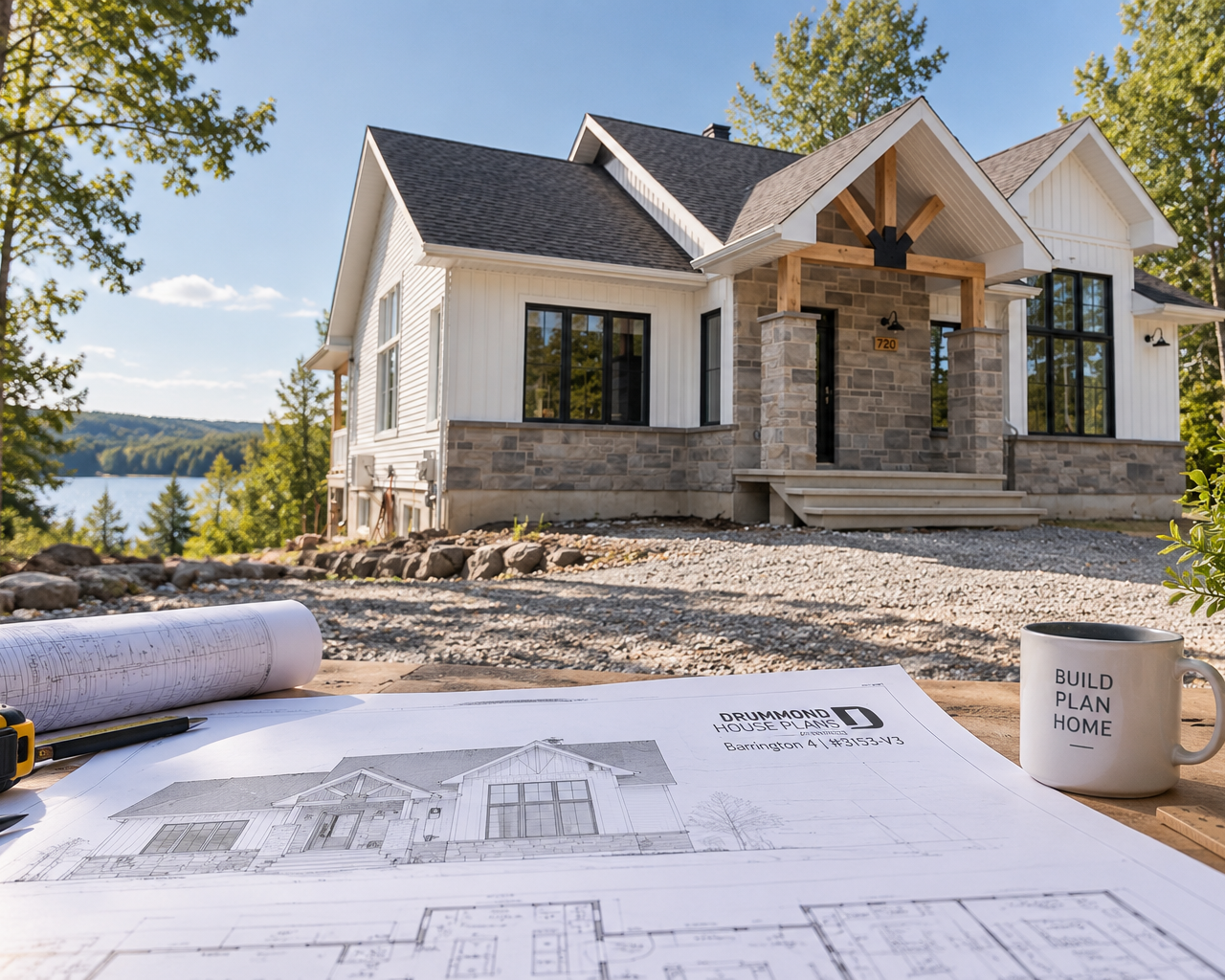
A home renovation plan lets you visualize changes before construction begins. It also helps coordinate the different parts of the project.
Depending on the renovation, the plan can identify:
- layout changes;
- new openings;
- a home addition;
- a basement remodel;
- required structural modifications;
- the dimensions and layout of new spaces.
A detailed plan also makes it easier to communicate your vision to contractors and other professionals.
Most importantly, it provides a clearer picture of the project before work begins.
👉 Learn about the process, costs, and key considerations in our complete home renovation plans guide.
A Greener Renovation Starts With Better Decisions
A green and sustainable home renovation does not depend on one material or technology.
Instead, it involves a series of thoughtful choices. You can reuse existing materials, improve energy performance, and create spaces that remain functional longer.
Good design also helps you compare different options before major work begins. Therefore, you can coordinate improvements and avoid unnecessary changes during construction.
A sustainable approach can ultimately create a home that better supports your comfort, lifestyle, and long-term needs.
👉 Want to explore sustainable design further? Discover how eco-friendly house plans can help you live better and build smarter.
👉 Already planning a renovation? Request a free estimate for your home renovation plan from Drummond House Plans.
Author
Tags
- Prev
- Next