

Why Build an Energy-Efficient Home?
Building an energy-efficient home is one of the smartest long-term investments you can make. A high-performance home reduces energy consumption, lowers utility bills, improves indoor comfort and increases the value of your property.
A home’s energy performance is determined long before construction begins. It starts with a well-designed house plan and proper orientation. High-quality insulation, airtight construction and energy-efficient windows help reduce energy loss throughout the year. Modern mechanical systems complete the equation, working with every other element to create a healthier, more comfortable and more sustainable home.
If your building lot, lifestyle or energy-efficiency goals require a unique solution, our Custom House Plan Service can help. Our designers create a home specifically tailored to your needs. Every design is optimized to maximize long-term energy performance.
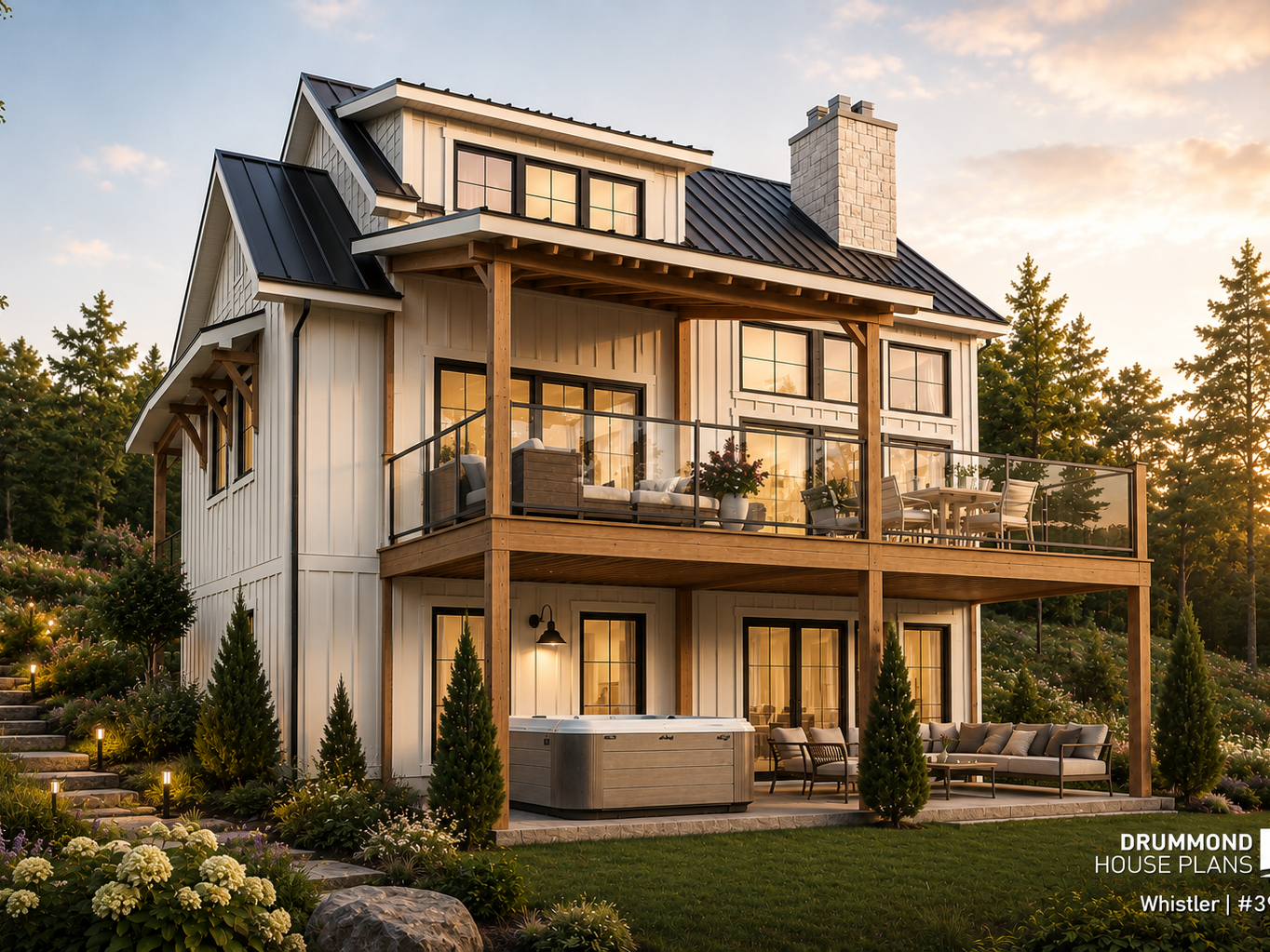
An energy-efficient home results from thoughtful design, quality materials and high-performance construction techniques. Its performance starts with a well-designed house plan. Proper orientation and high-performance windows maximize natural light while reducing energy loss. A compact layout, airtight construction and efficient mechanical systems work together to reduce energy consumption. Together, these elements improve comfort and energy efficiency throughout the year.
Love the home featured above?
Discover the complete Whistler #3974 House Plan, including floor plans, photos and customization options.
Why the House Plan Matters More Than Most People Think
Many homeowners focus on insulation or heating systems when trying to build an energy-efficient home. In reality, the house plan itself has one of the greatest impacts on long-term energy performance.
Window placement, home orientation, roof design, room layout and overall building shape all influence how much energy a home will consume throughout its lifetime. That’s why energy efficiency should always begin with a thoughtfully designed house plan.
Smart Design Principles for an Energy-Efficient Home
While insulation and mechanical systems are essential, the design of the house itself has a major impact on long-term energy performance. Smart architectural decisions made during the planning stage can significantly reduce heating and cooling demands without increasing construction costs.
Some of the most effective design principles include:
- Orienting the home to maximize natural daylight and passive solar gain.
- Designing a compact building footprint to reduce heat loss.
- Optimizing window placement to balance natural light and energy efficiency.
- Limiting unnecessary roof and wall complexity to improve the building envelope.
- Providing roof overhangs or exterior shading to reduce overheating during summer.
- Creating efficient room layouts that improve comfort while reducing wasted space.
Combined with high-performance construction techniques, these design principles help create a home that is comfortable, durable and energy efficient for decades.
🌿 St-Arnaud Eco #90111
Best for: Families looking for a spacious two-story modern farmhouse.
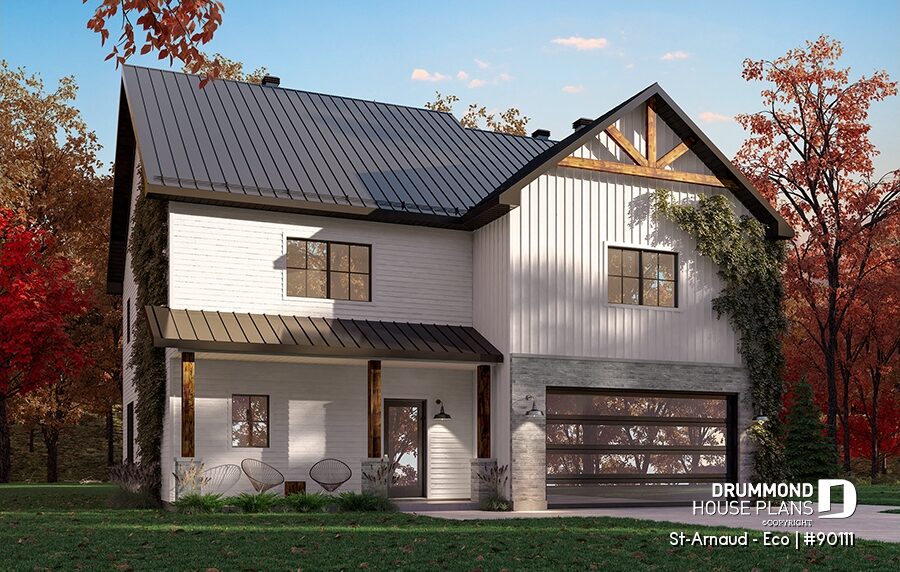
St-Arnaud Eco #90111 was designed for optimal southern backyard orientation. It maximizes passive solar heat gain, natural daylight and year-round comfort. Its spacious two-story farmhouse layout includes a dramatic double-height living room. Combined with a simplified building envelope, it exemplifies sustainable residential design.
👉 Explore the St-Arnaud Eco #90111 House Plan
Why Choose Drummond House Plans for an Energy-Efficient Home?
For more than 50 years, Drummond House Plans has been designing custom and pre-designed house plans. Our designers understand that energy efficiency starts long before construction begins.
Whether you choose one of our pre-designed house plans or create a custom home with our team, every project can be optimized. Every design improves comfort, reduces energy consumption and lowers long-term operating costs.
👉 Explore our collection of eco-friendly house plans.
What Makes a Home Energy Efficient Today?
Today’s energy-efficient homes go far beyond minimum building code requirements. High-performance construction combines superior insulation and airtight building techniques. It also includes efficient heating and cooling systems with heat recovery ventilation. Carefully designed floor plans complete this high-performance approach.
Many builders also follow programs such as ENERGY STAR® or regional high-performance building standards to achieve even greater energy savings.
7 Features of an Energy-Efficient Home
A truly energy-efficient home combines several design and construction principles that work together.
- Proper solar orientation
- High-performance insulation
- Airtight construction
- Energy-efficient windows
- Heat recovery ventilation (HRV)
- High-efficiency heating and cooling systems
- A compact and well-designed floor plan
High-Efficiency Heating and Cooling Systems
Heating and cooling account for a significant portion of a home’s annual energy consumption. Choosing the right HVAC system involves more than comparing purchase prices. Long-term operating costs, energy efficiency, maintenance requirements and compatibility with your home’s design should all be considered.
Today’s high-performance homes are often equipped with high-efficiency heat pumps, which provide both heating and cooling while using significantly less energy than many traditional systems. When combined with a well-insulated, airtight building envelope and a heat recovery ventilator (HRV), they help maintain consistent indoor comfort throughout the year while reducing energy consumption.
Depending on your climate, local energy costs and personal preferences, other heating solutions may also be appropriate. These include radiant floor heating, high-efficiency furnaces and hybrid systems. Choose the right system based on your home’s design and performance goals. Consider long-term operating costs rather than the initial purchase price alone.
Insulation
A well-insulated building envelope is one of the most effective ways to reduce energy consumption throughout the year.
Proper insulation is one of the most effective ways to reduce energy consumption throughout the year. High-performance insulation installed in walls, attics, floors and foundations helps keep heat inside during winter and outside during summer. Combined with airtight construction, quality insulation improves comfort while reducing heating and cooling costs.
Airtight Construction
An airtight building envelope is one of the key elements of an energy-efficient home. By minimizing unwanted air leakage, airtight construction reduces heat loss, eliminates drafts, improves indoor comfort and allows heating and cooling systems to operate more efficiently throughout the year.
Windows and exterior doors are among the most important components of an airtight home. Today’s high-performance windows feature insulated frames, double or triple glazing and low-emissivity (Low-E) coatings. Gas-filled panes significantly reduce heat transfer while maximizing natural light. Modern windows also reduce condensation and improve indoor comfort during both winter and summer.
High-quality exterior doors with insulated cores, durable weatherstripping and properly sealed frames further improve the home’s thermal performance by preventing unwanted air infiltration.
Combined with proper insulation and a balanced ventilation system, airtight construction creates a healthier living environment. It also creates a quieter and more energy-efficient home. At the same time, it helps homeowners reduce long-term energy costs.
Ventilation
Modern airtight homes require controlled ventilation to maintain healthy indoor air quality. Everyday activities, including cooking, showering and cleaning, generate moisture and indoor pollutants. These must be removed to prevent condensation, mould growth and poor indoor air quality.
A Heat Recovery Ventilator (HRV) continuously exchanges stale indoor air with fresh outdoor air while recovering much of the heat that would otherwise be lost. This improves indoor comfort, reduces energy waste and helps maintain a healthy living environment throughout the year.
Materials
The materials you choose play an important role in the long-term performance, durability and sustainability of your home. Selecting high-quality, responsibly sourced building materials can improve energy efficiency, reduce maintenance requirements and create a healthier indoor environment.
Whenever possible, choose products made from recycled or renewable resources and materials that are manufactured using environmentally responsible processes. Durable materials with a longer lifespan also reduce waste by requiring fewer replacements over the life of the home.
Indoor air quality is another important consideration. Many modern building products, including paints, flooring, adhesives and cabinetry, are now available in low-VOC (volatile organic compound) formulations that help minimize indoor air pollution and create a healthier living environment.
Reducing construction waste is equally important. Careful planning, efficient material use and recycling construction debris whenever possible can significantly reduce the environmental impact of building a new home.
Combined with thoughtful house design and energy-efficient construction techniques, sustainable building materials help create a home that is comfortable, durable and environmentally responsible for years to come.
Water
Water conservation is another important component of a sustainable home. Low-flow faucets, showerheads and toilets help reduce water consumption without sacrificing comfort.
👉 Want to make your home even more sustainable? Read our guide to rainwater harvesting and discover practical ways to collect and reuse rainwater while reducing potable water consumption.
Appliances
Modern, energy-efficient appliances can further reduce your home’s overall energy consumption. While they represent only one part of a high-performance home, choosing ENERGY STAR® certified products helps lower electricity use, reduce operating costs and minimize environmental impact over the long term.
When selecting appliances for a new home, consider their energy efficiency, expected operating costs and long-term reliability—not just the purchase price. Combined with a well-designed house plan and efficient mechanical systems, high-performance appliances contribute to a more comfortable, sustainable and cost-effective home.
How Much Does It Cost to Build an Energy-Efficient Home?
Building an energy-efficient home may require a slightly higher initial investment depending on the insulation levels, windows, mechanical systems and materials you choose. However, these additional costs are often offset over time through lower heating and cooling bills, reduced maintenance and improved resale value.
Many homeowners find that investing in energy-efficient design from the beginning is more affordable than upgrading a standard home later. Working with experienced designers also helps identify cost-effective solutions that maximize long-term performance without exceeding your construction budget.
To better understand overall construction costs, explore our guide on the cost of building a house.
Why Good House Design Makes the Difference
The most energy-efficient homes begin with smart design. Proper orientation, efficient room layouts, window placement and high-performance construction techniques all contribute to lower operating costs and greater long-term comfort.
Choosing the right house plan from the beginning allows homeowners to maximize energy efficiency without expensive renovations later.
Many homeowners also choose to modify one of our existing house plans instead of starting from scratch, allowing them to combine proven designs with improved energy performance.
Building an energy-efficient home is about much more than reducing utility bills. A well-designed, high-performance house provides greater comfort, healthier indoor air quality, lower maintenance costs and a smaller environmental footprint for decades.
At Drummond House Plans, every house plan can be customized to help homeowners achieve their energy-efficiency goals while creating a home perfectly adapted to their lifestyle, building lot and budget.
Choosing the Right House Plan for an Energy-Efficient Home
Not every house plan performs the same. Compact layouts, properly positioned windows, simplified rooflines and thoughtful room placement all contribute to lower heating and cooling costs. Choosing a home designed with these principles in mind is one of the smartest investments you can make for long-term comfort and energy efficiency.
The 🌿 PUR #90101 from our Eco-Friendly House Plan Collection is an excellent example of how thoughtful architecture can support sustainable living. Designed to maximize natural daylight and passive solar performance, it combines smart space planning, generous glazing and renewable energy features to create a beautiful, high-performance home.
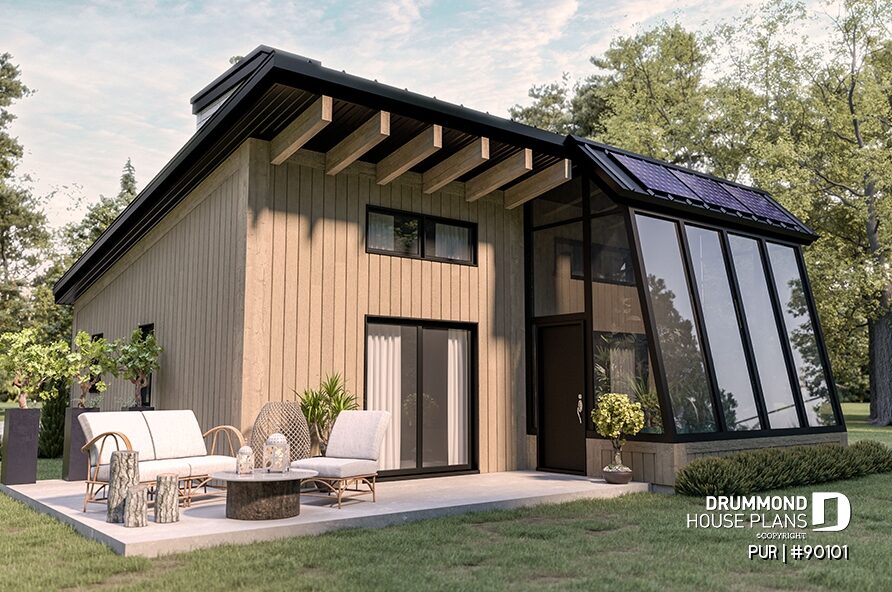
Selecting the right house plan from the very beginning is one of the most effective ways to improve your home’s long-term energy performance while reducing operating costs.
👉 Explore the PUR #90101 Eco-Friendly House Plan
Explore Our Eco-Friendly House Plan Collection
Every family has unique needs, which is why our Eco-Friendly House Plan Collection features a variety of thoughtfully designed homes optimized for passive solar performance, abundant natural daylight and long-term energy efficiency. Beyond the examples already featured in this guide, here are two additional designs that showcase different architectural styles and lifestyles.
🌿 Maple Way Eco #90115
Best for: Homeowners seeking a comfortable single-story farmhouse with a double garage.
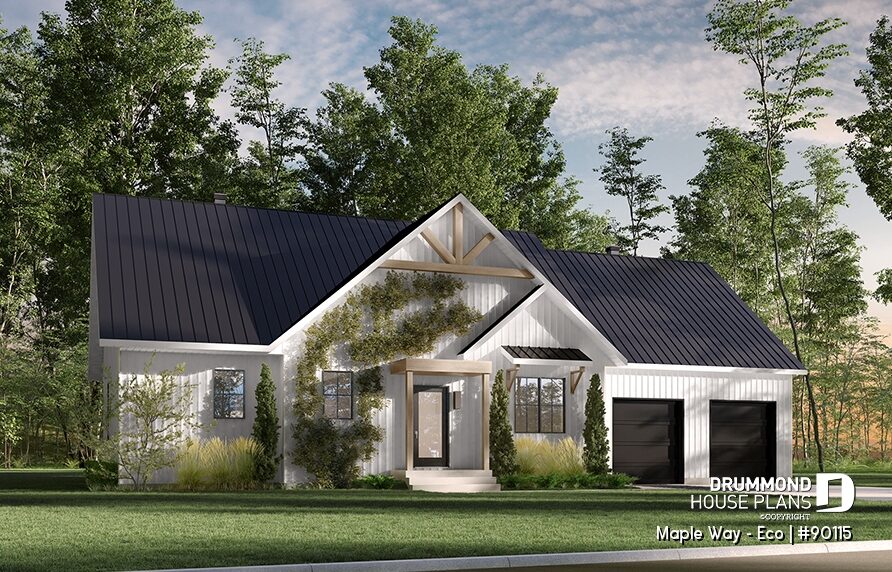
The Maple Way Eco #90115 demonstrates how passive solar design, optimized window placement and a simplified building envelope can create a bright, comfortable and energy-efficient single-story farmhouse. Its spacious layout, generous rear glazing and functional design make it an excellent choice for families looking to combine everyday comfort with long-term energy performance.
👉 Explore the Maple Way Eco #90115 House Plan
🌿 Touchstone Eco #90113
Best for: Families dreaming of a modern cottage or mountain-style retreat.
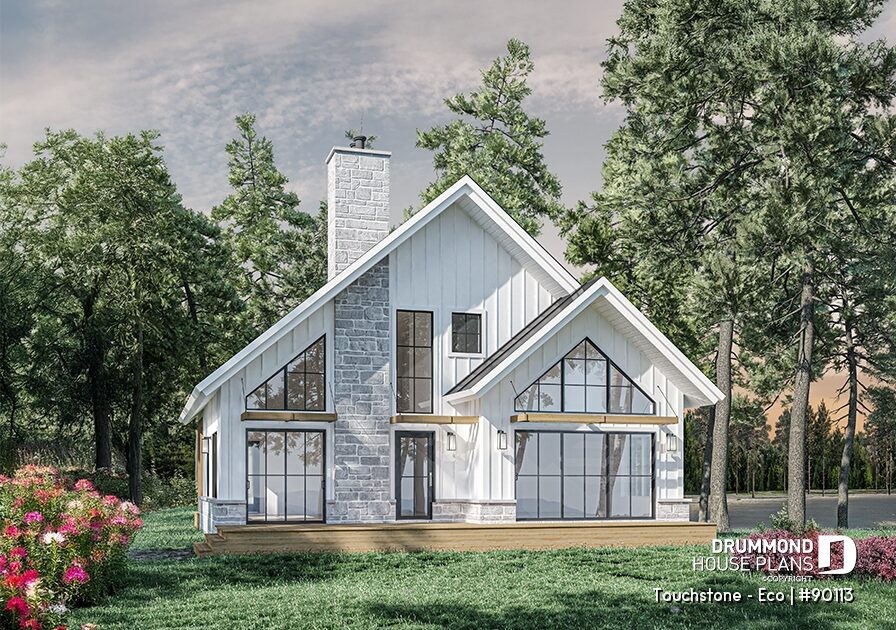
The Touchstone Eco #90113 demonstrates how passive solar principles can be incorporated into a modern cottage design. Created for optimal southern backyard orientation, its cathedral ceilings, expansive rear glazing and open-concept living areas maximize natural daylight while supporting excellent energy performance. It’s an ideal choice for those seeking the warmth and character of a mountain retreat without compromising sustainability.
👉 Explore the Touchstone Eco #90113 House Plan
Frequently Asked Questions
Are Energy-Efficient House Plans Worth It?
Yes. A well-designed energy-efficient house plan reduces heating and cooling costs, increases comfort, improves resale value and lowers your home’s environmental impact for decades.
What makes a home energy efficient?
A combination of proper design, insulation, airtight construction, efficient windows and mechanical systems.
Are energy-efficient homes more expensive?
Although construction costs may be slightly higher, lower utility bills often offset the initial investment over time.
Can an existing home become more energy efficient?
Yes. Upgrading insulation, windows, heating systems and air sealing can significantly improve energy performance.
Is a heat recovery ventilator (HRV) necessary?
In most modern airtight homes, an HRV is strongly recommended to maintain healthy indoor air quality while minimizing heat loss.
Build Your Energy-Efficient Home with Drummond House Plans
Whether you’re dreaming of an energy-efficient bungalow, modern farmhouse, cottage or two-story home, Drummond House Plans offers hundreds of customizable home designs created to meet today’s building standards and tomorrow’s energy expectations.
Every successful project begins with a thoughtfully designed house plan. Whether you choose one of our pre-designed models or work with our designers to create a custom home, we can help you maximize comfort, reduce long-term energy costs and build a home perfectly suited to your lifestyle, building lot and budget.
Whether you’re building your forever home or a vacation retreat, choosing an energy-efficient house plan is one of the smartest investments you can make for your family’s comfort, your finances and the environment.
Ready to start your project?
Explore our collection of Eco-Friendly House Plans or contact our team to learn more about our Custom House Plan Service and create a home designed specifically for your land, budget and future.