

Key Factors to Consider Before Choosing a House Plan
Choosing the right house plan is one of the most important decisions in any home-building project. The design you select will influence your construction budget, daily comfort, long-term functionality and overall quality of life. A well-chosen plan can also help prevent costly changes while ensuring your future home truly supports your lifestyle.
With thousands of home designs available, it can be difficult to know where to begin. The number of bedrooms, total square footage, architectural style, lot characteristics, construction budget and future needs should all be considered before making a final decision.
In this guide, you’ll learn how to choose a house plan that fits your lifestyle, lot and budget. You’ll also discover how to compare different types of homes, avoid common mistakes and determine whether a ready-to-build plan, a modified design or a fully custom house plan is the right solution for your project.
How to Choose the Right House Plan
Choosing the right house plan requires evaluating your lifestyle, family needs, lot characteristics, construction budget and long-term goals. A well-adapted design makes efficient use of space, helps control unnecessary costs and creates a functional home that can continue to meet your needs over time.
Define Your Needs Before Selecting a House Plan
Before browsing designs, it’s important to clearly define what your household truly needs. A house plan should first support your real daily life rather than simply appeal visually.
Questions to Ask Before Selecting a House Plan
| Consider | Questions to Ask |
|---|---|
| Household size | How many bedrooms and bathrooms are needed today and in the future? |
| Daily lifestyle | Do you prefer open living spaces or more defined rooms? |
| Work and study | Is a dedicated home office or flexible workspace required? |
| Accessibility | Would a main-floor primary suite or single-story layout be beneficial? |
| Storage | Do you need a mudroom, walk-in pantry, large closets or garage storage? |
| Future needs | Could your family grow, change or require multigenerational living? |
By prioritizing function over appearance, you are far more likely to choose a home that serves you well long term.
Choose the Right Type of House Plan for Your Lifestyle
Not all home styles serve the same purpose. The type of house you choose has a major effect on comfort, functionality, and land use.
Which Type of House Plan Best Fits Your Lifestyle?
| Type of Home | Main Advantages | Important Considerations |
|---|---|---|
| Single-story home | Simple circulation, accessibility and convenient everyday living | May require a wider lot |
| Two-story home | More living space on a smaller building footprint | Includes stairs and separates living areas between levels |
| Home with a basement | Provides storage and potential future living space | Foundation and future finishing costs should be considered |
| Slab-on-grade home | Eliminates the basement and may simplify some projects | Mechanical equipment and storage must be planned elsewhere |
| Multigenerational home | Supports family living while preserving privacy | Requires careful planning for both households |
| Cabin or vacation home | Can be adapted to scenic, wooded or sloped lots | Access, utilities and seasonal conditions should be evaluated |
Choose a House Plan That Fits Your Lot
Your lot is one of the most important factors in selecting a home design, yet it is often underestimated.
Key lot considerations include:
✔ Lot width and depth
✔ Slope (flat or sloped)
✔ Sun orientation
✔ Local building regulations
For example, a sloped lot may be ideal for a walkout basement design, while a narrow lot requires a plan optimized for width efficiency.
Choosing a lot-compatible house plan can prevent expensive structural adjustments later.
📖 Learn more: How to Choose the Right Lot for Your New Home
Choosing a House Plan for Building in Canada
When choosing a house plan in Canada, it is important to consider more than the layout and architectural style. Climate, local building requirements, snow loads, foundation options and regional construction practices may influence how a design should be reviewed or adapted before construction.
Canadian homeowners often prioritize practical features such as mudrooms, attached garages, generous storage, energy-efficient layouts and flexible basement spaces. However, needs and construction requirements can vary considerably between Ontario, New Brunswick, Alberta and other regions of the country.
Before building, the selected house plan should be reviewed by qualified professionals and adapted when required to reflect the site conditions and applicable local requirements. For projects in Ontario, Drummond House Plans also provides access to BCIN-qualified professionals who can review and adapt plans according to applicable Ontario requirements.
🏡 Explore Our Favorite House Plans in Canada
📖 Learn More About Our BCIN Services in Ontario
Choosing a House Plan for Building in the United States
When selecting a house plan for a project in the United States, regional climate, lot characteristics, local building requirements and lifestyle preferences should all be considered. A design that works well in the Northeast may require different features or adaptations than a home planned for the South, Midwest, West Coast or a mountain region.
Foundation types, roof designs, outdoor living spaces, garage configurations and energy-efficiency priorities may also vary according to local conditions. Before construction, the selected plan should be reviewed by qualified local professionals and adapted when required to reflect the building site and applicable regulations.
Looking for inspiration? Explore our best-selling U.S. house plans, featuring farmhouse house plans, modern house plans, classic style house plans, cottage house plans, ranch house plans and family-friendly home designs selected for their popularity among homeowners across the United States.
🏡 Explore Our Best-Selling U.S. House Plans
The Importance of Professional Guidance and Local Requirements
Building requirements can vary according to the country, state, province, municipality and characteristics of the site. A quality house plan may therefore need to be reviewed or adapted before construction.
Working with qualified professionals can help ensure that the plan is:
✔ adapted to the lot and site conditions;
✔ evaluated according to applicable local requirements;
✔ practical from a structural and construction perspective;
✔ aligned with the project’s budget and objectives.
Local professionals can also identify required changes related to foundations, structural loads, energy efficiency, zoning or other regional considerations.
Evaluate Your Construction Budget Early
Budget is a major factor when choosing the right house plan, as certain design choices can significantly increase construction costs.
Important budget factors include:
✔ Total square footage
✔ Structural complexity
✔ Number of stories
✔ Foundation type
For example, simpler home shapes are often more affordable to build, while an unfinished basement can allow homeowners to spread certain expenses over time. Roof complexity, the number of corners, large window areas, structural spans and extensive plan modifications can also influence the overall construction budget.
A detailed construction material list can help you request more accurate estimates, compare supplier pricing, calculate material quantities and better plan purchases throughout the construction process.
👉 Before committing to a house plan, learn more about the factors that influence home construction costs so you can establish a realistic budget and allow for site-related expenses, local requirements and unexpected costs.
Ready-to-Build, Modified or Custom House Plans
When choosing a house plan, there are generally three options: selecting a ready-to-build design, modifying an existing house plan or creating a fully custom home. The right approach depends on how closely an existing design meets your needs, the characteristics of your lot, your budget and the level of personalization required.
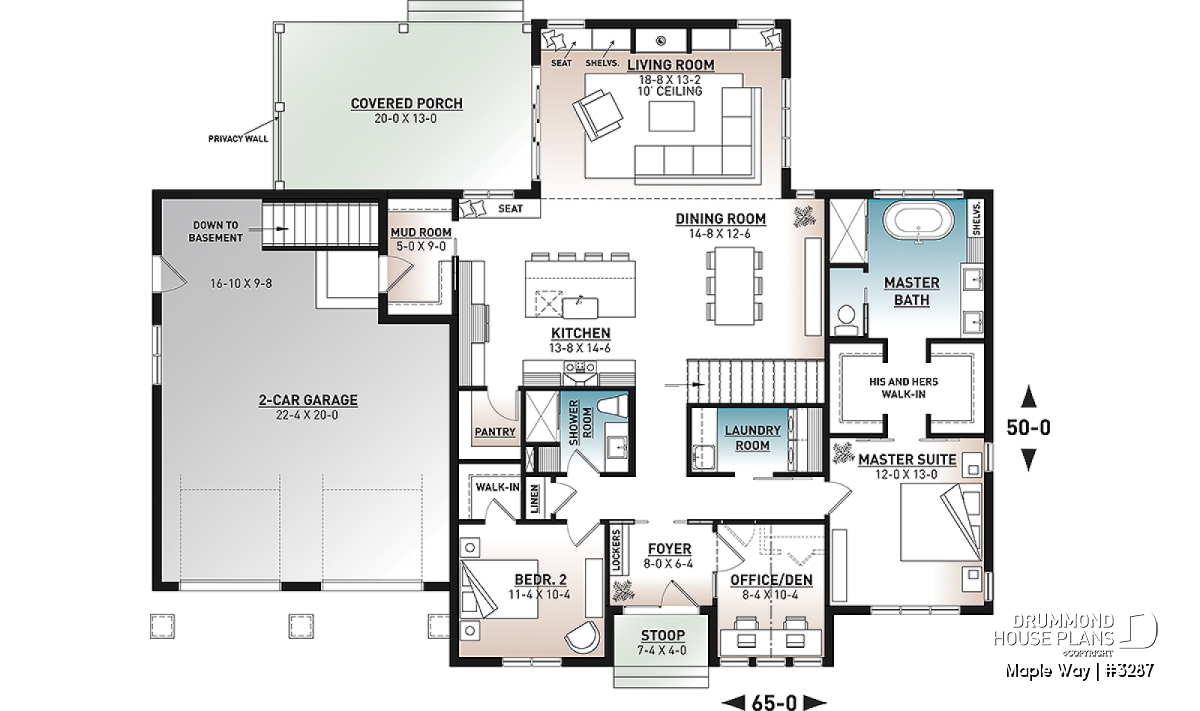
Reviewing detailed floor plans makes it easier to evaluate room dimensions, circulation, storage, natural light and the relationship between living spaces before deciding which option best suits your project.
| House Plan Option | Main Advantages | Best Suited For |
|---|---|---|
| Ready-to-build house plan | More affordable, faster to obtain and available in a wide variety of architectural styles | Buyers who find a design that already meets most of their needs |
| Modified house plan | Preserves the foundation of an existing design while allowing selected features to be adapted | Buyers who like a model but need changes to the layout, dimensions, garage or exterior |
| Custom house plan | Designed specifically around the lot, lifestyle and unique project requirements | Buyers with specific needs, challenging lots or a highly personalized vision |
In many cases, modifying an existing house plan provides an ideal balance between affordability, efficiency and personalization. It allows you to begin with a proven design while adapting selected features to better reflect your lifestyle and building project.
👉 Explore Our House Plan Modification Services
👉 Discover Our Custom House Plan Services
Compare Multiple Plans Before Deciding
Comparing several house plans makes it easier to identify your priorities, evaluate different layouts and understand which features provide the greatest value for your lifestyle and budget. Pay attention to room dimensions, circulation, storage, natural light and the relationship between everyday living spaces rather than comparing square footage alone.
Taking the time to compare designs often leads to a more informed and satisfying long-term decision.
Prioritize Natural Light and Interior Layout
Today, natural light is an essential criterion for many buyers, as it directly influences comfort and overall quality of life. A bright, open living space also helps maximize the feeling of spaciousness while creating a pleasant and inviting environment for everyday living.
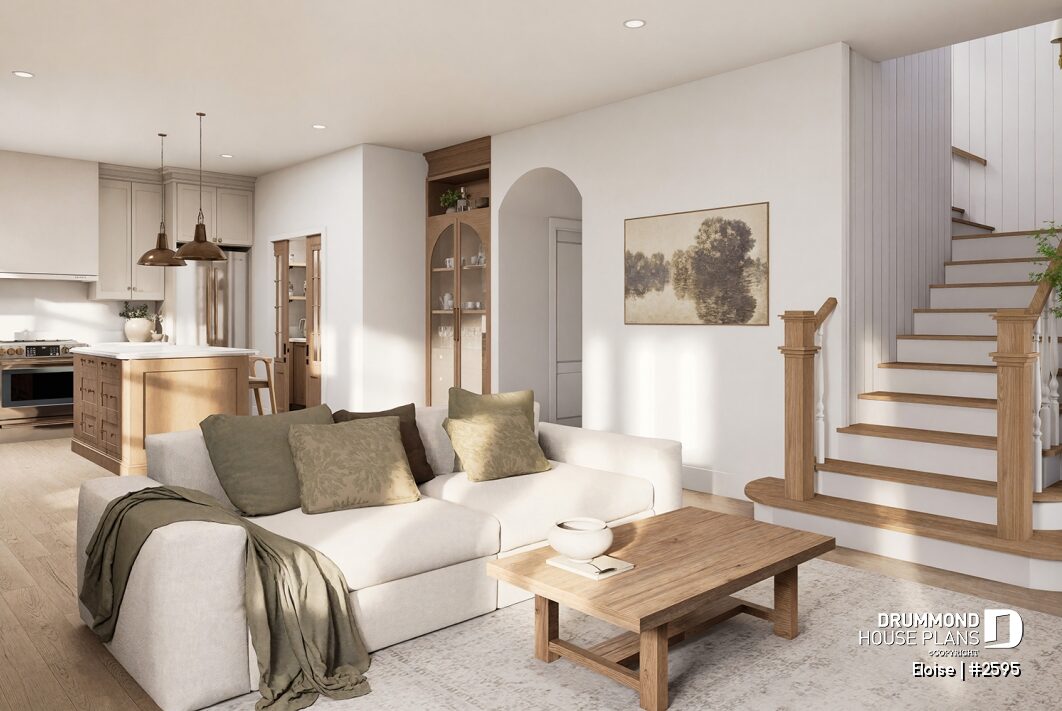
To maximize natural light:
✔ Prioritize large windows
✔ Orient living spaces strategically
✔ Favor open-concept layouts
In addition, a thoughtfully designed layout improves both circulation and the efficient use of space. A central kitchen, for example, often becomes a true gathering point within the home. Similarly, integrating a walk-in shower can help create a bathroom that feels more open, bright, and modern while also improving overall functionality.
Choosing a bright and functional house plan is therefore a lasting investment.
Plan for Future Lifestyle Changes
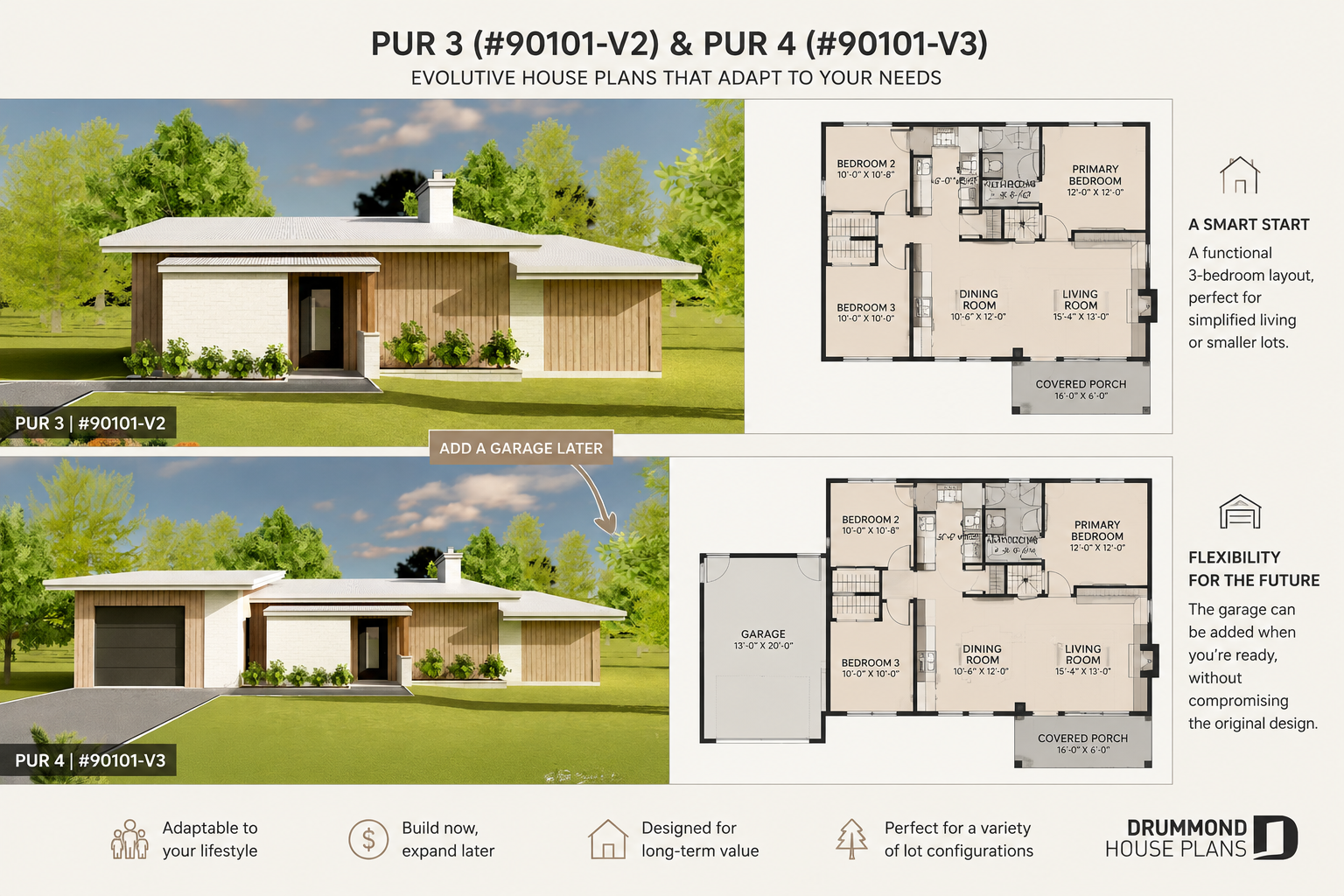
A well-chosen house plan should meet your current needs while remaining flexible enough to support future changes. Family composition, work habits and the way living spaces are used may evolve over time.
Consider future possibilities such as:
✔ family growth;
✔ children leaving home;
✔ remote work;
✔ multigenerational living;
✔ aging in place;
✔ changing storage or accessibility needs.
Features such as a future basement development, a flexible office, an extra bedroom or a main-floor primary suite can make a home easier to adapt over time.
A larger home is not always the most flexible solution. Thoughtfully designed multipurpose spaces can often support changing needs without adding unnecessary square footage.
Common Mistakes to Avoid When Choosing a House Plan
Choosing a home design based mainly on its exterior appearance can lead to costly compromises later. The plan must also be compatible with the lot, construction budget and everyday needs of the household.
Common mistakes include:
- choosing a design based only on architectural style;
- underestimating the total construction budget;
- selecting more square footage than necessary;
- ignoring lot dimensions, slope or zoning restrictions;
- overlooking sun orientation and window placement;
- focusing on the number of rooms without considering their dimensions;
- underestimating storage and mechanical-space requirements;
- planning only for current needs;
- requesting extensive modifications without evaluating their effect on cost and design.
Before making a final decision, imagine how you would move through the home each day. Consider the relationship between the entrance, kitchen, garage, bedrooms, bathrooms, laundry room and storage areas.
Frequently Asked Questions About Choosing a House Plan
What is the best type of house plan for my needs?
The best house plan is one that fits your lifestyle, lot, budget and long-term needs. A single-story house plan may be ideal for accessibility and simple circulation, while a two-story home can provide more living space on a smaller footprint.
Also consider the number of bedrooms, storage, home office needs, future family changes and whether you want a basement, garage or main-floor primary suite.
Should I choose a ready-to-build house plan or a custom house plan?
A ready-to-build house plan is generally more affordable and faster to obtain when an existing design already meets most of your needs. A custom house plan offers greater flexibility and can be designed specifically for your lot, lifestyle and architectural preferences.
A modified house plan provides a third option. It allows you to start with an existing design and adapt selected features without creating an entirely new plan.
Can an existing house plan be modified?
Yes. Many existing house plans can be modified to better fit the homeowner’s needs, lot and project requirements.
Common modifications include:
- changing room dimensions or layouts;
- adding or modifying a garage;
- adjusting windows and doors;
- changing exterior materials or architectural details;
- adapting the foundation;
- modifying the plan for a narrow, sloped or challenging lot.
The feasibility and cost of each change depend on the original design and the extent of the modifications requested.
What factors are most important when choosing a house plan?
The most important factors are your lifestyle, lot characteristics, construction budget, required square footage and long-term needs.
You should also evaluate:
- the number and dimensions of the rooms;
- everyday circulation;
- storage and mechanical spaces;
- natural light and window placement;
- foundation and garage requirements;
- future accessibility;
- local zoning and building requirements.
A good house plan should balance functionality, comfort, affordability and flexibility.
How do I choose the right house plan for my lot?
Choose a house plan that is compatible with your lot’s width, depth, slope, orientation, access and applicable zoning requirements.
A narrow lot may require a compact or two-story design, while a sloped property may be well suited to a walkout basement. Setbacks, views, sun exposure, utilities and site conditions should also be evaluated before finalizing the plan.
Is it better to build a smaller, more efficient home?
A smaller, well-designed home can often be more economical to build, heat and maintain without sacrificing comfort.
The quality of the layout is usually more important than square footage alone. Efficient circulation, practical storage, multipurpose rooms and future basement development can provide flexibility without adding unnecessary space.
Can I use the same house plan in Canada and the United States?
A house plan can provide a useful starting point for a project in either Canada or the United States. However, it may need to be reviewed and adapted according to the building location.
Requirements can vary by province, state, municipality, climate and site conditions. Foundations, structural loads, energy-efficiency requirements and construction details may therefore differ from one region to another.
Before construction, have the plan reviewed by qualified professionals familiar with the applicable local requirements.
Do house plans need to be adapted to local building requirements?
Yes, a house plan may require adaptations before it can be used for construction in a specific location.
Possible changes may involve:
- foundations and frost protection;
- snow, wind or seismic loads;
- structural components;
- energy-efficiency requirements;
- zoning and setbacks;
- materials and construction details;
- site-specific conditions.
The required adaptations depend on the project location, the property and the regulations that apply.
Can I have a house plan modified by another designer?
Generally, no. A copyrighted house plan should not be modified by another designer without authorization from the copyright owner, unless the applicable licence or a written agreement specifically permits it.
House plans, architectural drawings and original building designs may be protected by copyright in both Canada and the United States. Purchasing a plan generally gives the buyer permission to use it under the terms of the purchase agreement; it does not automatically transfer ownership of the copyright. Canadian copyright includes exclusive rights such as reproduction, while U.S. copyright protection can apply to architectural plans and original building designs.
Another designer, architect, architectural technologist or drafting professional should therefore not copy, redraw or modify a protected plan without the copyright owner’s permission. Changing dimensions, room layouts, exterior features or other elements does not automatically remove the original copyright protection.
For modifications to a Drummond House Plans design, contact Drummond House Plans or an authorized professional. The plan can then be adapted to your lot, lifestyle and regional requirements while respecting the original design and the applicable licence.
When in doubt, obtain written authorization before having a house plan copied, redrawn or modified.