

Is It Still Possible to Build a Home for $250K Today?
Yes, building a home for $250,000 is still possible today, as long as you make the right choices early in the project. With rising construction costs, many buyers are asking the same question. Building an affordable home is still achievable, but it requires a smart and efficient approach.
Every decision matters, from the home’s shape and size to the foundation, roof, materials and level of finish. Important: this $250,000 budget refers to the construction of the home and generally excludes taxes, land and certain additional project costs.
To build a home for $250K, the goal is to focus on smart design, simple construction and optimized living space.
👉 The secret is not necessarily building bigger… but building smarter.
A compact, thoughtfully designed home can still offer plenty of comfort, style and natural light without adding unnecessary square footage. A warm and inviting home does not have to exceed your budget.
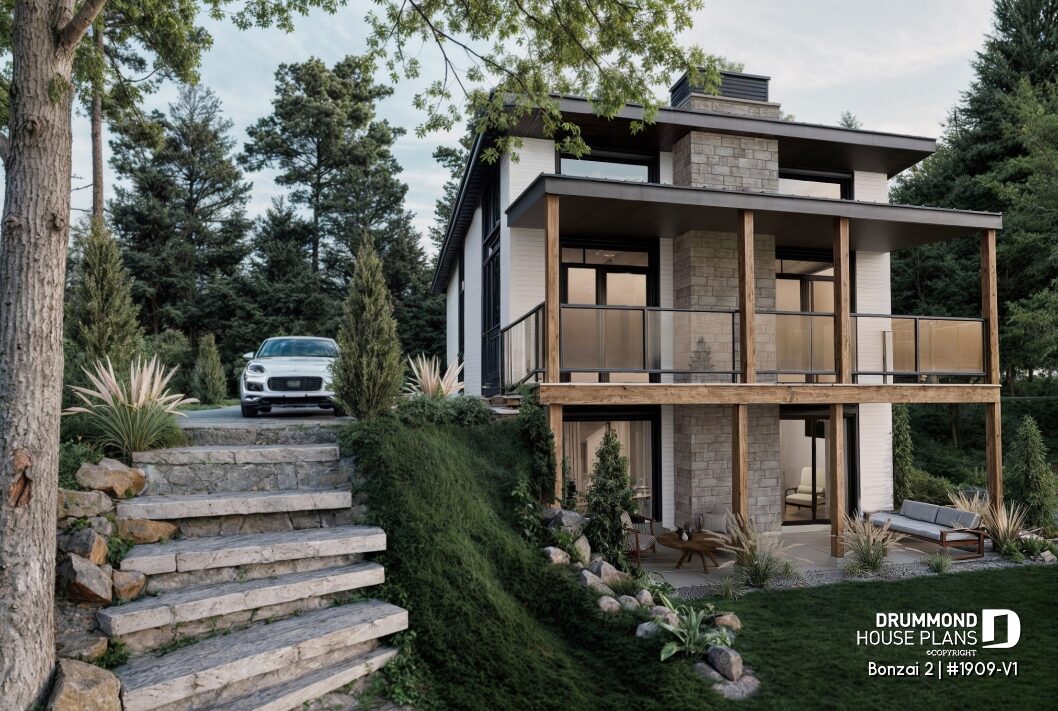
👉 The Bonzai 2 (#1909-V1) is a great example of how thoughtful design can make a compact home feel bright, spacious and welcoming. Large windows, open living spaces and an efficient layout help maximize every square foot while keeping the overall design relatively simple.
What Kind of Home Can You Really Build for $250K Today?
With a $250,000 construction budget, a compact and efficiently designed home is generally the most realistic option. A home of approximately 900 to 1,200 sq. ft. can be a good starting point, depending on the region, foundation type, materials, finishes, labor costs and site conditions.
Rather than focusing only on square footage, the key is to choose a house plan that makes efficient use of the available space. Simple shapes, straightforward rooflines and carefully planned layouts can help keep construction costs under control while still creating a comfortable and inviting home.
For a project in this budget range, consider:
✔ 900 to 1,200 sq. ft. of efficiently planned living space
✔ A compact and optimized house plan
✔ An unfinished basement or slab-on-grade foundation, depending on the project
✔ A simple shape and relatively straightforward roof design
✔ Materials and finishes selected with the budget in mind
As mentioned above, the $250,000 budget refers to the construction of the home itself and generally excludes land, taxes and certain additional project costs.
👉 Want a better understanding of today’s construction prices? Explore our complete guide to home construction costs and discover the factors that can influence your total budget.
Home Shape: A Key Factor in Saving Money
The shape of a home can have a significant impact on construction costs. At a similar square footage, a compact and relatively simple design generally involves fewer complex architectural details to build.
For a project with a tighter budget, certain design choices can help keep construction complexity under control:
✔ Simple, compact shape: limits unnecessary walls, corners and structural details
✔ Straightforward roof design: reduces the number of valleys, gables and connections
✔ Fewer offsets: simplifies the structure and building envelope
✔ Optimized square footage: allows more of the budget to go toward spaces you actually use
The goal is not necessarily to build the smallest home possible, but to make the most of every square foot.
A compact home can feel surprisingly spacious when circulation, natural light and open living areas are thoughtfully designed.
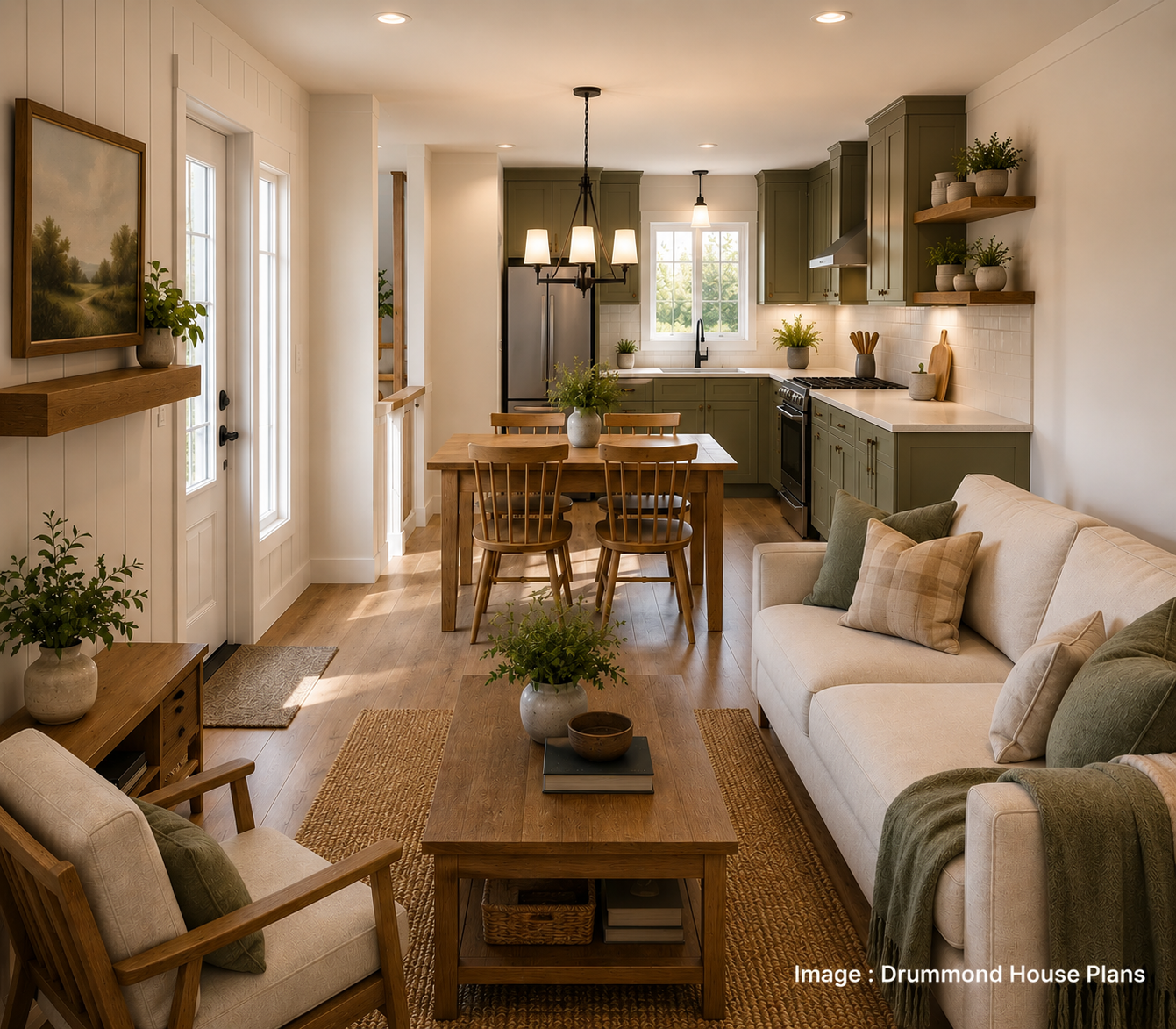
A bright open-concept layout can make a smaller footprint feel much more generous. Natural light, warm materials and an efficient floor plan can create a comfortable and inviting home without adding unnecessary square footage.
👉 Explore our open-concept house plans featuring bright, connected living spaces and layouts designed to make efficient use of every square foot.
Is a Bungalow or Two-Story Home More Affordable?
There is no single answer. At a similar amount of living space, a two-story home may require a smaller foundation and roof because part of the living area is stacked vertically. A bungalow generally requires a larger footprint to provide the same amount of living space.
However, the final construction cost also depends on the structure, staircase, roof, foundation, materials, finishes and site conditions. A two-story home is therefore not automatically less expensive to build than a bungalow.
| Home Type | Factors That May Affect Cost | Things to Consider |
|---|---|---|
| Bungalow | Generally requires a larger footprint, foundation and roof at comparable living space | All rooms are located on one level, with no staircase |
| Two-Story | Foundation and roof can potentially be more compact | Staircase, structural requirements and construction on multiple levels |
For a project aiming to build a home for $250K, the number of stories is only one factor to consider. A well-controlled square footage, simple shape and efficient floor plan can be just as important when managing the construction budget.
Beyond the overall shape of the home, roof design can also influence construction cost and complexity.
Roof Design: A Choice That Can Influence Construction Costs
Roof design can influence both the cost and complexity of building a home. The size of the roof, number of slopes, spans, structural requirements and architectural details can all affect the final construction cost.
For a project where budget is a priority, keeping the roof relatively simple can help reduce construction complexity:
✔ Fewer slopes and offsets: fewer connections and complex details to build
✔ Simple roof shape: generally easier to plan and construct
✔ Well-controlled dimensions: spans and structural requirements can significantly affect cost
Gable Roof or Mono-Slope Roof?
A gable roof remains a simple and widely used option. Its relatively straightforward design can make it an interesting choice when the goal is to keep construction complexity under control.
A mono-slope roof can also work well on a compact home while creating a more contemporary architectural look. Its cost, however, depends on several factors, including the width of the home, structural spans, snow loads and the framing required.
There is no single roof type that is always the least expensive to build. The overall design and structure of the home matter just as much.
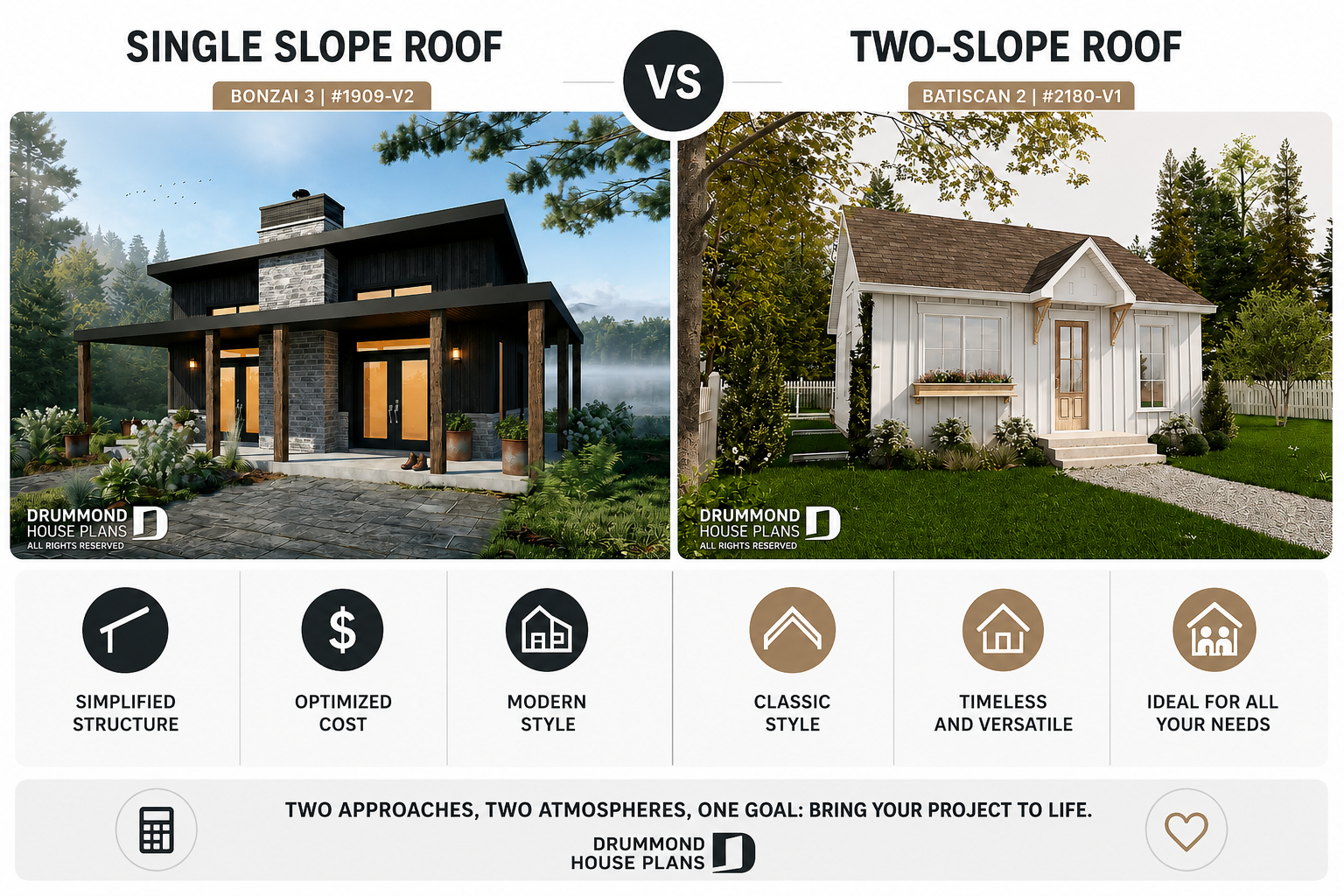
The Bonzai 3 (#1909-V2) and Batiscan 2 (#2180-V1) illustrate two very different approaches: a contemporary mono-slope roof and a classic gable roof. Both can work beautifully on a compact home, but their structural requirements will vary depending on the project.
Roof Type Comparison
Different roof designs can influence construction complexity, structural requirements and overall cost.
| Roof Type | Characteristics | What to Consider |
|---|---|---|
| Gable Roof | Simple, widely used design | Pitch, dimensions, structure and materials |
| Mono-Slope Roof | Contemporary design with one main slope | Spans, snow loads and structural requirements |
| Complex Roof | Multiple slopes, offsets or connections | More structural details and construction complexity |
For a project with a limited budget, reducing roof complexity can be more important than choosing one specific roof type. The best option depends on the home’s dimensions, structural requirements, climate and architectural style.
Should You Choose a Slab Foundation or Basement to Stay Within a $250,000 Budget?
The type of foundation can have a significant impact on construction costs. A slab-on-grade foundation may reduce some of the work and materials associated with a full foundation, while a basement provides additional space that can be finished immediately or later.
The best option depends on the lot, soil conditions, home size, region and specific project requirements. A slab-on-grade foundation is therefore not automatically the least expensive option in every situation.
Foundation Type Comparison
Each foundation type offers different advantages depending on the project, budget and future space requirements.
| Foundation Type | Advantages | What to Consider |
|---|---|---|
| Slab-on-Grade | Eliminates the need to build a basement and can simplify some projects | No living or storage space beneath the home |
| Crawl Space | Provides access beneath the floor for certain mechanical systems | Limited height and requirements vary by project |
| Full Basement | Provides additional space and future finishing potential | Larger foundation and additional costs if the basement is finished |
For a compact home, a slab-on-grade foundation can be an interesting option when a basement is not needed. An unfinished basement, however, can allow homeowners to plan for additional living space without increasing the home’s footprint.
For a project targeting a $250,000 construction budget, the foundation should be evaluated as part of the overall house design rather than as an isolated cost.
Potential Savings with a Slab-on-Grade Foundation
In some projects, choosing a slab-on-grade foundation instead of a full basement can reduce initial construction costs. The actual difference varies depending on soil conditions, excavation, drainage, insulation, plumbing, home size, labor costs and regional construction prices.
For a project targeting a $250,000 construction budget, it is therefore important to compare foundation options based on the specific house plan and actual site conditions.
The Nordika (#6102) provides a useful real-world example. With an unfinished basement, its current estimated construction cost is approximately $270,000 plus taxes when built by a contractor. With a slab-on-grade foundation, the same model could potentially come in below the $250,000 mark, depending on project conditions.
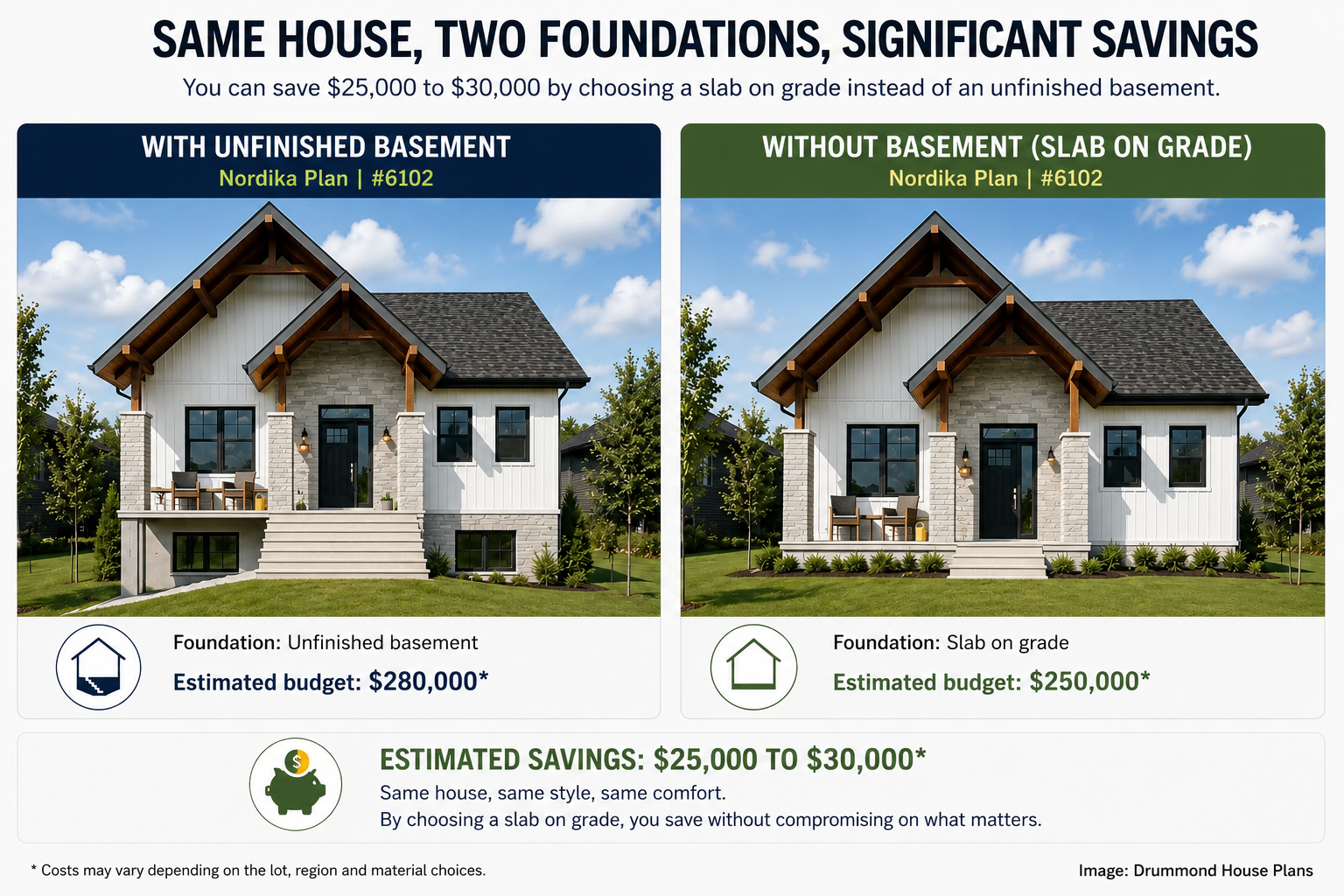
This example shows why foundation choice should be considered early when selecting a house plan. A slab-on-grade foundation may reduce some initial costs, while an unfinished basement provides additional space that can be completed as needs and budget evolve.
👉 Dreaming of a bright and welcoming home like this one? Discover all the details of the Nordika (#6102) house plan.
Basement Finishing Cost
Choosing an unfinished basement during the initial construction can help postpone some finishing expenses and spread the cost of the project over time. Many homeowners choose to finish their basement later as their needs and budget evolve.
As a general guideline, basement finishing can cost approximately $40 to $80 per sq. ft., depending on materials, the number of rooms, plumbing and electrical work, and the level of finish selected.
Planning the basement during the initial house design can make future finishing easier. The location of the staircase, windows, plumbing and potential rooms can all be considered from the start.
For a project targeting a $250,000 construction budget, this approach makes it possible to prioritize the essential living spaces first and complete additional areas later.
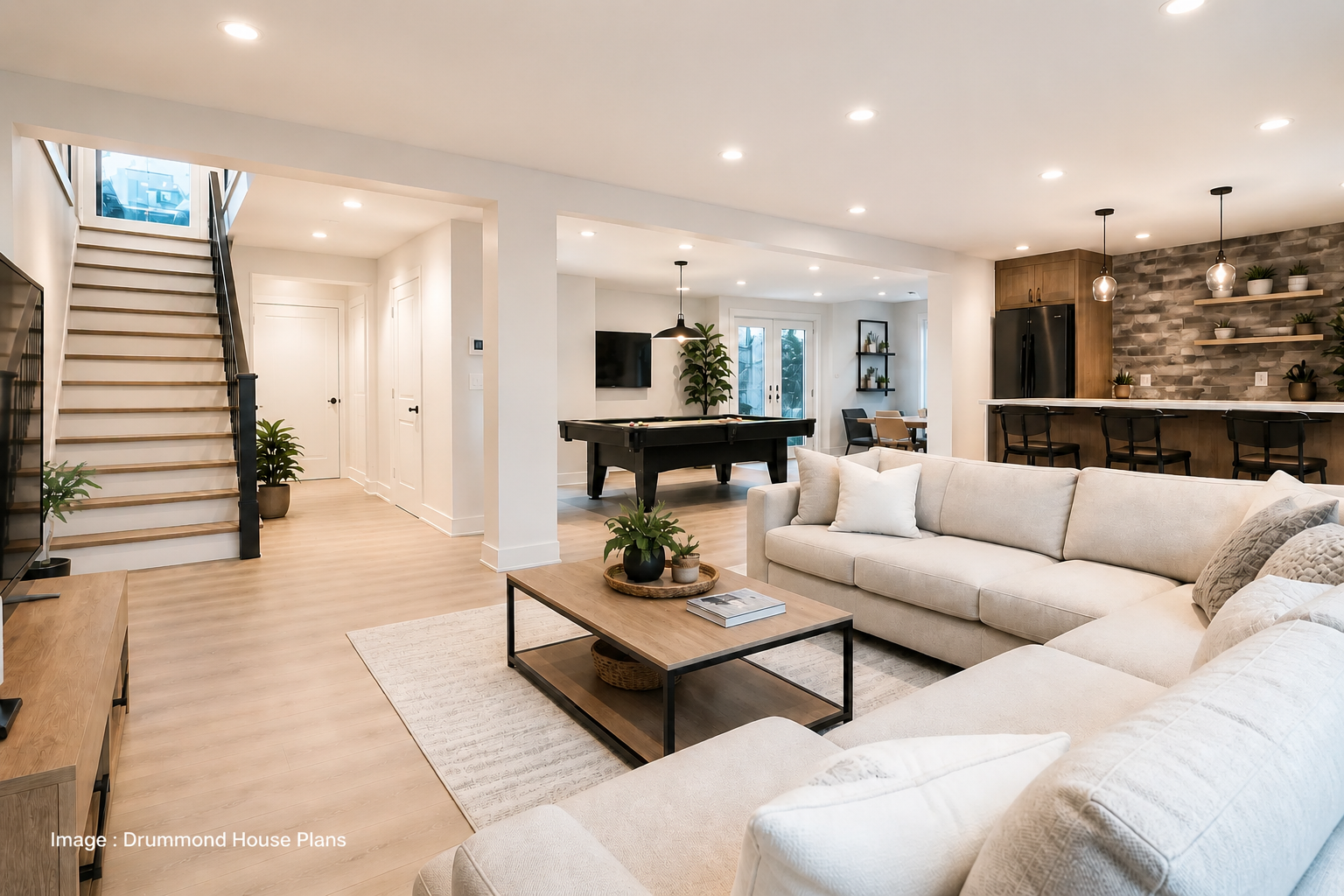
Modern finished basements are no longer limited to storage or utility space. Today, they often include bright family rooms, home theaters, game areas, guest suites, fitness spaces or even secondary living zones designed to evolve with a family’s changing needs.
👉 Explore our house plans by foundation type and find designs that can be adapted to a basement, slab-on-grade, crawl space or other foundation options.
Affordable House Plans That Still Feel Warm and Inviting
Building on a tighter budget does not mean sacrificing comfort, style or natural light. A compact house plan can still offer bright living spaces, warm architectural character and a layout designed to make every square foot count.
The key is to prioritize efficient design over unnecessary square footage. Simple forms, well-planned living areas and the potential to finish certain spaces later can help create a home that feels welcoming while keeping the construction budget in mind.
Real House Plans Designed for a $250K Budget
Bonzai 3 (#1909-V2): A Bright Small Cottage with Fireplace
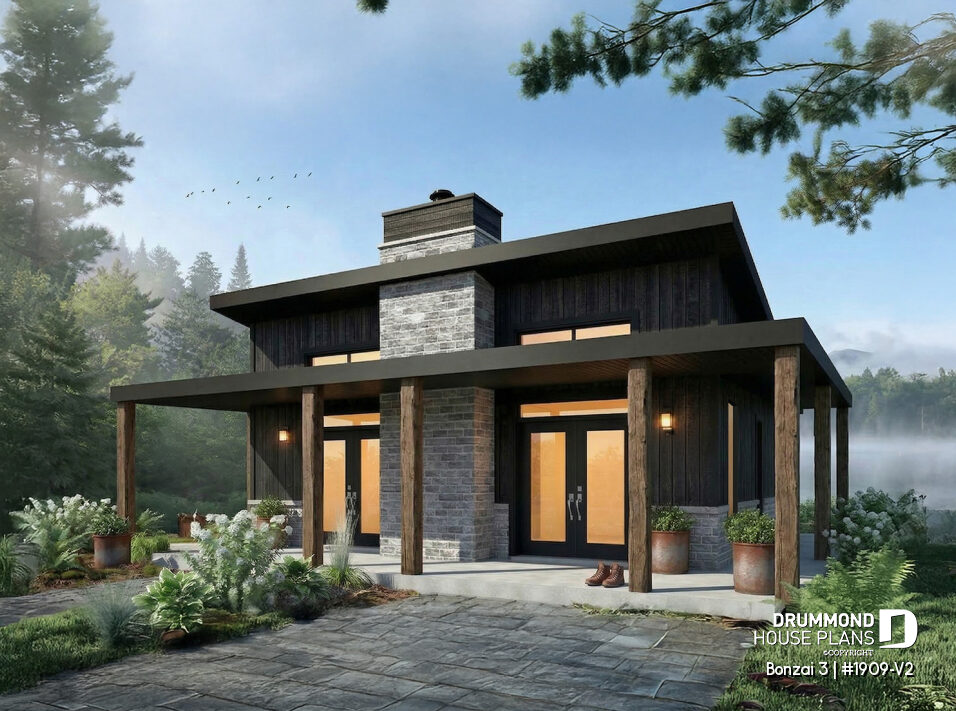
👉 Discover all the details of the Bonzai 3 (#1909-V2) and explore its layout possibilities.
✔ 2 bedrooms, fireplace
✔ Bright cottage or cozy modern home
✔ Covered outdoor terrace
✔ Multiple versions available for this plan
The sloped ceiling and open-concept layout help create a spacious feeling despite the home’s more compact footprint.
—
Miranda (#3137): A Compact Country Home with Expansion Potential
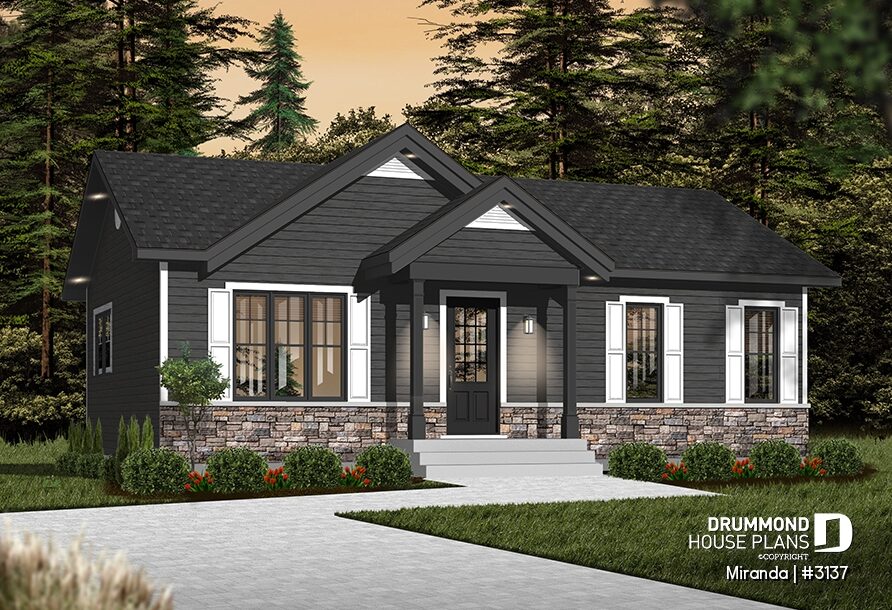
👉 Discover all the details of the Miranda (#3137) and explore its layout possibilities.
✔ 2 bedrooms
✔ Compact and budget-friendly
✔ Basement ready to be finished
✔ Optional garage addition available
✔ Multiple versions of this plan are available
—
Lozère (#3113): An Affordable Country House Designed to Grow Over Time
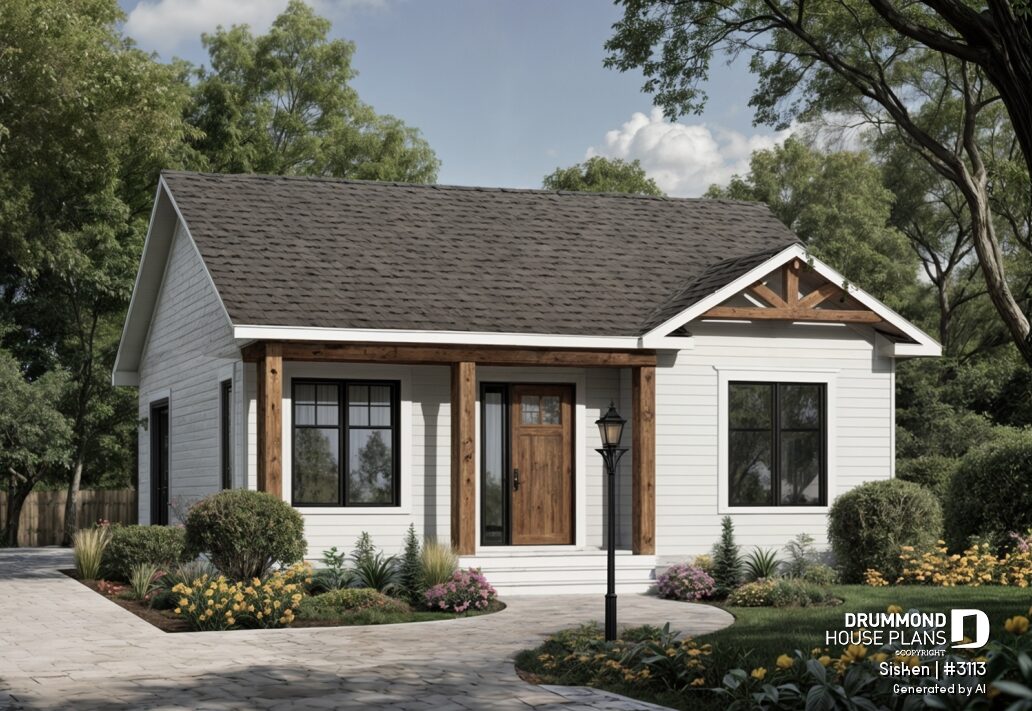
With its warm country-inspired design and efficient layout, the Lozère (#3113) demonstrates how thoughtful planning can make homeownership more accessible. Its unfinished basement also creates the opportunity to gradually expand the living space as needs and budgets evolve over time.
👉 Discover all the details of the Lozère (#3113) and explore its layout possibilities.
✔ 2 bedrooms
✔ Expandable home with unfinished basement
✔ Excellent value for the price
✔ A slightly larger version is also available
The unfinished basement allows construction costs to be spread over time while preserving excellent future expansion potential.
—
Sanaa (#1704-BH): A Flexible Modern Home with Open-Concept Living
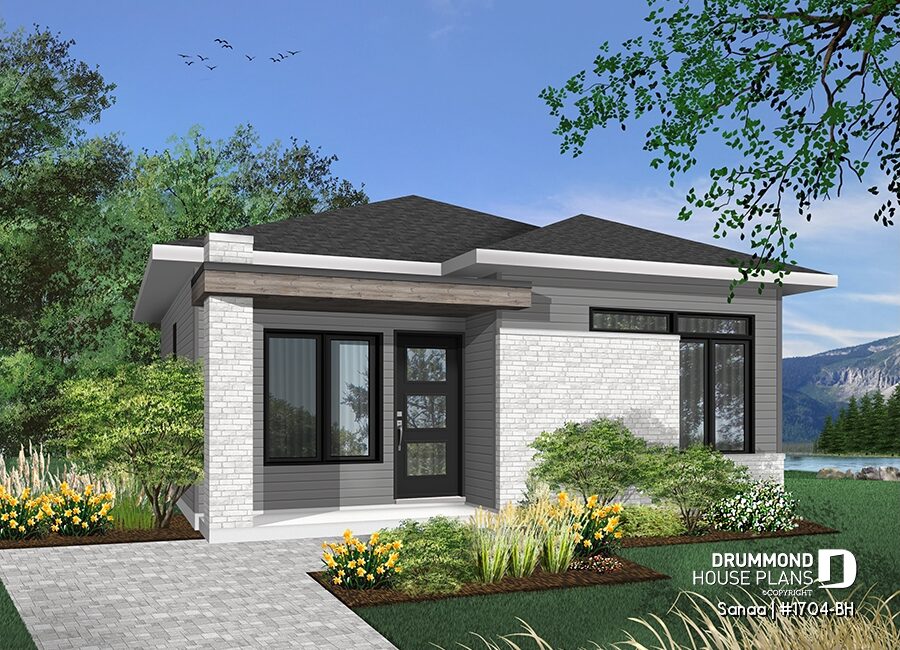
With its bright open-concept layout and modern architectural style, the Sanaa (#1704-BH) demonstrates how a smaller home can still offer excellent comfort and adaptability. Its multiple versions and expandable basement make it a smart solution for evolving family and lifestyle needs.
👉 Discover all the details of the Sanaa (#1704-BH) and explore its different available versions.
✔ 2 bedrooms
✔ Open-concept layout
✔ Basement ready to be finished
The unfinished basement allows construction investments to be spread over time while preserving valuable future adaptability.
—
Melia (#1908): A Small Family Home with 3 Bedrooms and Country Charm
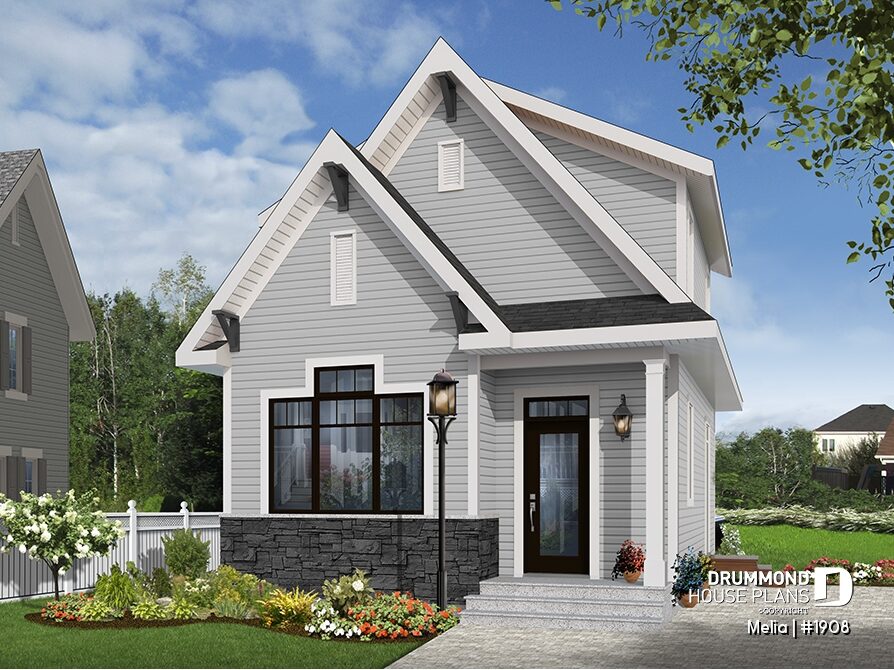
With its timeless country-inspired design and smart interior layout, the Mélia (#1908) demonstrates how a smaller home can still offer impressive functionality and comfort. Its unfinished basement also creates valuable opportunities for future living space expansion.
👉 Discover all the details of the Melia (#1908) and explore its features.
✔ 3 bedrooms, 2 bathrooms
✔ Open-concept layout
✔ Basement ready to be finished
Thanks to its smart layout, this compact home offers 3 bedrooms and 2 bathrooms in a warm and affordable design.
Affordable house plans do not have to sacrifice comfort, natural light or architectural style. With efficient layouts, compact footprints and spaces that can evolve over time, these five homes show how thoughtful design can help make the most of a more limited construction budget.
Ultimately, choosing the right house plan is about finding the right balance between budget, functionality and the way you want to live.
Building with a Contractor vs. Self-Build
The way a home is built can have a significant impact on the overall construction budget. Working with a turnkey contractor, managing the project yourself or completing part of the construction involves different levels of responsibility, time and potential savings.
Construction Method Comparison
| Construction Method | Homeowner Involvement | Project Management | Potential Savings |
|---|---|---|---|
| Turnkey Contractor | Low | Primarily handled by the contractor | More limited |
| Self-Management | Medium to high | Homeowner coordinates some or all trades | Varies by project |
| Self-Build | High | Homeowner completes and/or coordinates a significant portion of the work | Potentially higher |
No construction method guarantees a specific amount of savings. Actual results depend on the work completed by the homeowner, experience level, subcontractors, materials and overall project complexity.
Self-Build or Self-Management: Go Further with Your Budget
Construction cost estimates shown with Drummond House Plans are based on homes built by a turnkey contractor. They generally exclude taxes, land and certain additional project costs.
For homeowners who can complete or manage part of the work themselves, self-build or self-management can reduce some labor and project management costs. Based on Drummond House Plans’ experience, potential savings can generally range from 10% to 30%, depending on the homeowner’s level of involvement, the work performed and the project itself.
As a result, a house plan with an estimated turnkey construction cost above $250,000 may sometimes become achievable with a more limited budget.
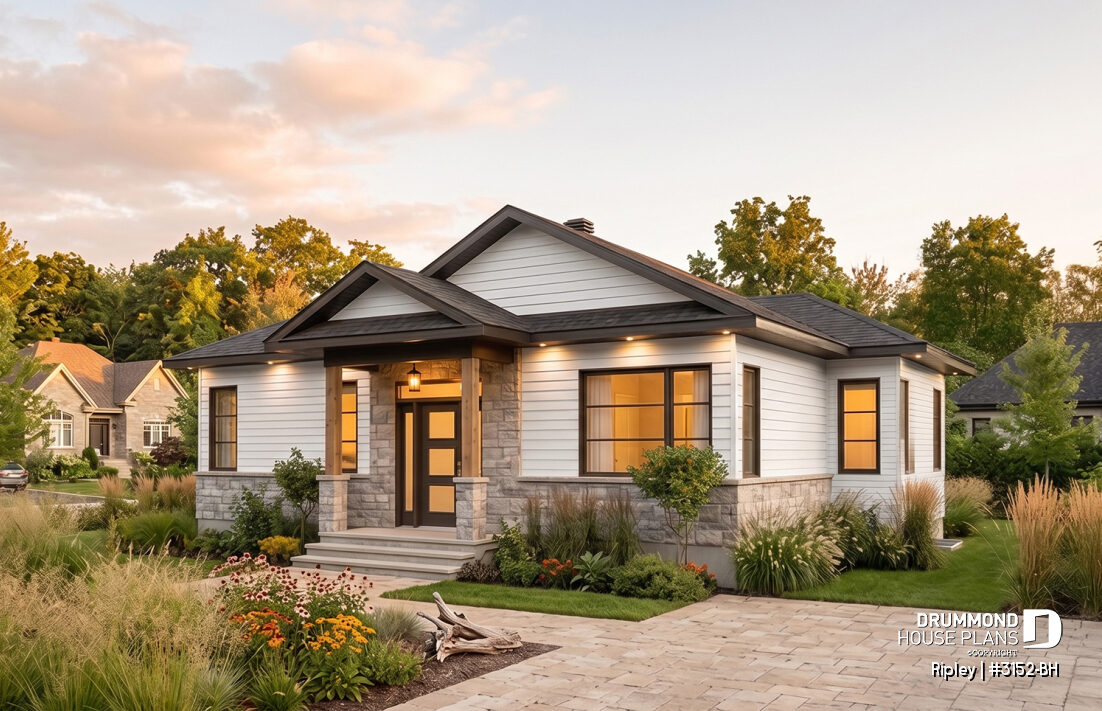
The Ripley (#3152-BH) is a good example of the type of home that may become more accessible when a homeowner takes on a greater role in the construction process. Its modern bungalow design combines a bright open-concept layout with comfortable single-story living.
👉 Discover all the details of the Ripley (#3152-BH) and explore its layout possibilities.
✔ Bright modern bungalow
✔ Open-concept living spaces
✔ Contemporary curb appeal
✔ Comfortable single-story layout
✔ Multiple versions available for this plan
👉 Love this type of layout? Explore our bungalow house plans for more single-story designs focused on comfortable and practical everyday living.
For homeowners considering self-build or self-management, a plan like Ripley illustrates how greater involvement in the construction process can sometimes expand the range of homes that may fit within a given budget.
Turnkey Contractor: A More Structured Approach
With a $250,000 turnkey construction budget, the house plan generally needs to align more closely with that budget from the start. Compact square footage, a simple shape and carefully selected construction features become particularly important.
A turnkey contractor handles most of the project management, which can simplify the construction process but generally leaves less opportunity for savings through personal involvement.
Which Construction Method Should You Choose?
Self-management can offer a good compromise for homeowners who want greater control over their budget while coordinating the different trades themselves.
Self-build may provide greater savings when the homeowner completes or manages a significant portion of the work, but it requires more time, knowledge and involvement.
With a turnkey contractor, most of the construction process is managed for you, but the house plan needs to correspond more closely to the available budget from the beginning.
👉 Whatever approach you choose, a simple and efficiently designed house plan remains one of the best ways to keep construction costs under control.
Can You Add a Garage Later?
Yes. Planning a garage for a later phase can help reduce the amount of money needed during the initial construction and spread some project costs over time.
A garage can be considered during the design of the house and built later, allowing the initial budget to focus on the home and its essential living spaces.
Ideally, however, the future garage should be anticipated from the beginning. The home’s position on the lot, exterior openings, access points and certain structural elements can then be planned with the future addition in mind.
✔ Prioritize the initial budget for the home
✔ Spread certain construction expenses over time
✔ Plan for future needs from the start
👉 Explore our detached garage plans to discover different sizes and layouts, including options for additional storage, workshops and multifunctional spaces.
A detached garage can also provide greater flexibility when planning its location on the property, depending on the lot and local requirements.
👉 Want to plan the budget for this future addition? Learn more about garage construction costs and the factors that can influence the final price.
Land: A Critical Factor
The lot can have a significant impact on the overall construction budget. Topography, soil conditions, access to utilities and the amount of site preparation required can all influence the final cost of the project.
A lot requiring extensive excavation, drainage, clearing or utility connections can add significant expenses before construction of the home even begins.
👉 Learn how to choose the right lot and discover the factors to consider before purchasing land for your project.
Financing Solutions That Can Help You Build for $250K
Financing is another important part of planning a home construction project. Depending on your location and financial situation, different programs and financing options may help reduce the upfront funds required or make the overall budget easier to manage.
Options to explore may include:
✔ Mortgage financing designed for new home construction
✔ RRSP Home Buyers’ Plan and FHSA programs for eligible buyers in Canada
✔ GST/HST rebates for qualifying new homes in Canada
✔ Local grants, financing programs or first-time buyer incentives that may be available in certain U.S. states and regions
Because eligibility and available programs vary by location, it is important to evaluate financing based on your specific project and financial situation.
What About a Custom Home Plan?
A custom home plan allows the design to be developed around your lot, lifestyle, priorities and construction budget from the very beginning. The home’s size, shape and layout can all be carefully planned according to what matters most for your project.
Custom design is not limited to large or high-end homes. Drummond House Plans creates custom homes for a wide range of budgets, including compact and affordable designs where efficient use of space is a priority.
Our professional house designers can help evaluate different layouts, optimize living spaces and develop a home that reflects both your needs and the realities of your project.

👉 Learn how a custom home plan can help maximize your budget while adapting perfectly to your lifestyle.
Still wondering if building a home for $250K is realistic today? Here are answers to some of the most common questions buyers are asking.
Frequently Asked Questions About Building a Home for $250K
Can you really build a home for $250K today?
Yes, building a home for $250K is still possible, but the right choices need to be made early in the project. A compact house plan, simple construction, carefully selected materials and efficient use of space can all help keep the budget under control.
What type of home can you build for $250K?
With a $250K construction budget, a compact and efficiently designed home of approximately 900 to 1,200 sq. ft. can be a realistic starting point. The actual size will depend on location, materials, foundation, finishes, labor costs and site conditions.
Both bungalows and compact two-story homes can work when the overall design remains relatively simple.
👉 Prefer everything on one level? Explore our bungalow house plans for more efficient single-story designs.
Does the $250K budget include land and taxes?
Generally, no. In this article, the $250K budget refers primarily to the construction of the home itself. Land, taxes, permits, site preparation, utility connections, landscaping and other project expenses may need to be added separately.
👉 Before choosing your property, read our guide to choosing the right lot for your house and learn which site conditions can influence your construction budget.
Does a smaller home always cost less to build?
Not necessarily. A smaller home with a complex roof, numerous architectural details or high-end finishes can still be expensive to build.
Efficient design matters just as much as square footage. A compact footprint, simple shape and well-planned layout can help make better use of the construction budget.
Is a slab-on-grade cheaper than a basement?
In some projects, yes. A slab-on-grade foundation can reduce some of the excavation, foundation and construction work associated with a full basement.
However, the actual cost difference depends on soil conditions, site preparation, home size, region and project requirements. A basement also provides additional space that can be finished later.
👉 Explore our house plans by foundation type to compare designs that can accommodate different foundation options.
How much does it cost to finish a basement later?
As a general guideline, finishing a basement can cost approximately $40 to $80 per sq. ft., depending on the layout, materials, plumbing, electrical work and level of finish.
Planning the basement during the initial house design can make future finishing easier and allow some expenses to be postponed until your needs and budget evolve.
Can you add a garage later to save money?
Yes. Building the garage later can help reduce the amount required during the initial construction and spread some expenses over time.
Ideally, the future garage should be considered during the house design so its location, access and connection to the home can be properly planned.
👉 Explore our detached garage plans, or learn more about garage construction costs before planning this future addition.
Can self-build or self-management really reduce costs?
Yes. Based on Drummond House Plans’ experience, self-build or self-management can potentially reduce construction costs by approximately 10% to 30%, depending on the homeowner’s level of involvement, the work performed and the project itself.
Greater involvement can stretch the construction budget further, but it also requires more time, knowledge and responsibility.
Can you finance a home built for $250K?
Yes. Financing options depend on the buyer’s financial situation and location.
In Canada, options may include mortgage financing, the RRSP Home Buyers’ Plan, FHSA and certain GST/HST rebates for eligible buyers. Buyers in the United States should explore financing programs, grants and incentives available in their state or region.
What is the best strategy for building a home for $250K?
The best strategy is to keep the overall project simple and make every square foot count. A compact footprint, efficient floor plan, straightforward roof and carefully chosen foundation can all help control construction costs.
Features such as a garage, basement finishing or certain upgrades can also be planned for a later phase, allowing the home to evolve over time.
👉 Ready to explore your options? Browse our affordable house plans and discover designs created with efficient layouts, comfortable living spaces and construction budgets in mind.
Building a Home for $250K: A Realistic Goal with the Right Choices
Yes, building a home for $250K can still be possible, but every decision matters. Square footage, home shape, foundation, roof design, materials and construction method can all influence the final budget.
The goal is not simply to build smaller, but to choose a thoughtfully designed house plan that makes every square foot count. With clear priorities and smart planning, a more limited budget can still lead to a bright, comfortable and welcoming home.
👉 The key is not necessarily building more, but making better use of what you build.
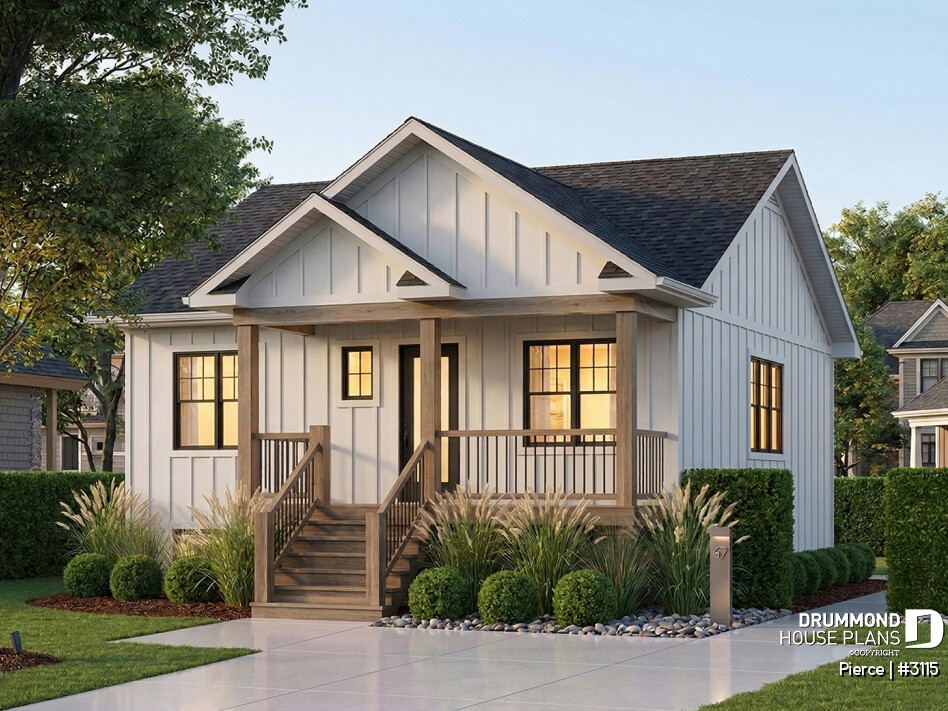
Pierce (#3115): A Warm Farmhouse Designed for Affordable Living
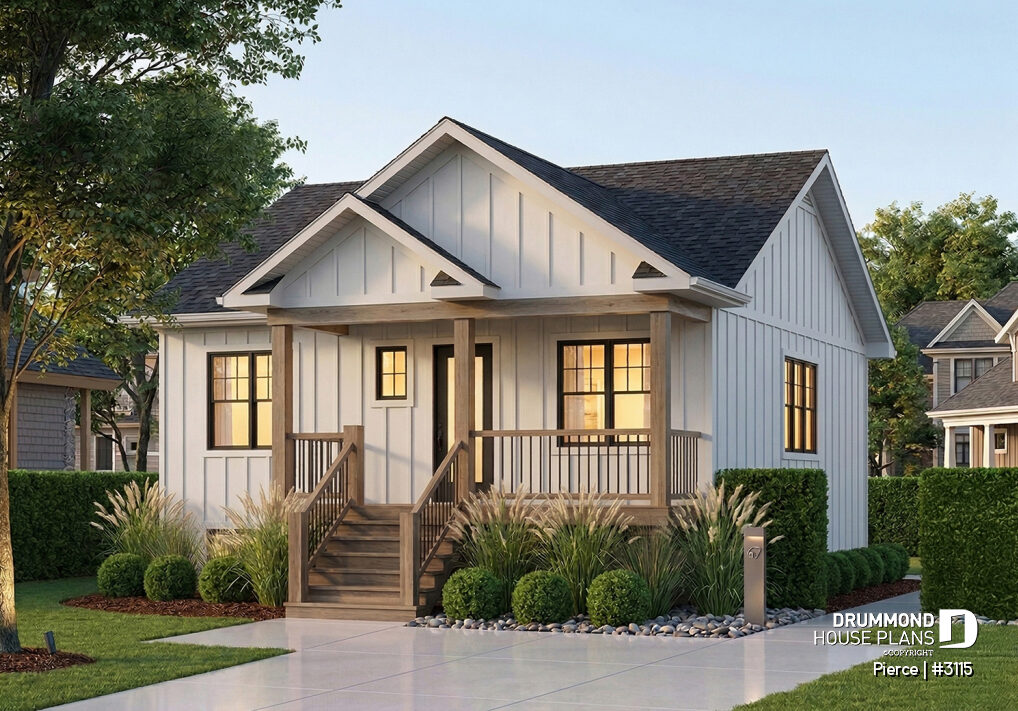
The Pierce (#3115) is a great example of how a compact home can combine farmhouse character with an efficient and inviting layout. Its two-bedroom design provides comfortable everyday living, while the unfinished basement offers the potential to add more living space later as needs and budget evolve.
👉 Discover all the details of the Pierce (#3115) and explore its layout possibilities.
✔ 2 bedrooms
✔ Warm modern farmhouse style
✔ Bright and inviting layout
✔ Unfinished basement for future expansion
✔ Compact and efficiently designed footprint
👉 Love this architectural style? Explore our modern farmhouse house plans for more warm and inviting designs with modern layouts.
The Pierce illustrates an important principle when building with a more limited budget: a smaller home does not have to feel like a compromise. Good design can provide character, comfort and flexibility without adding unnecessary square footage.
Building a home for $250K requires careful choices, but the same principles apply throughout the project: keep the design efficient, prioritize what matters most and plan ahead for spaces or features that can be completed later.
Discover Affordable House Plans
Ready to move from inspiration to planning? Drummond House Plans offers several ways to find or create a home that fits your budget, needs and lifestyle.
👉 Found a plan you love but need a few changes? Request a free quote to customize your plan.
With over 30 offices of professional house designers, Drummond House Plans can also help adapt an existing plan to your project, whether you prefer to work online or with a local team.
And if you want a home designed entirely around your needs, custom home design services are available for projects of all sizes and budgets. Custom design is not reserved for large or luxury homes — it can also be an excellent solution for creating a compact, efficient home tailored to your lot and priorities.