


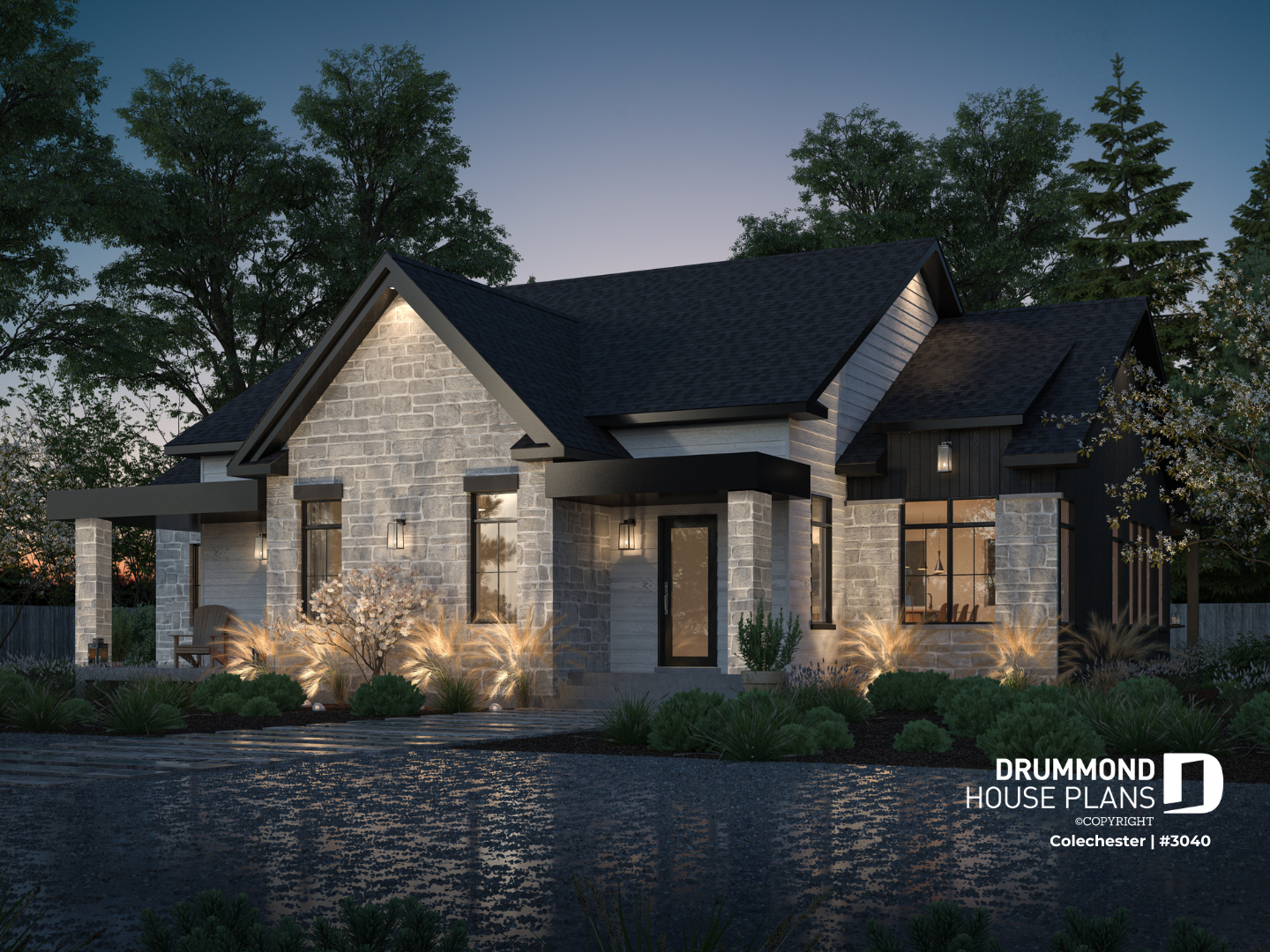
Multi-generational living (also called an intergenerational home) is winning over more and more families: welcoming a parent, housing a young adult, living close to loved ones… while still keeping everyone’s independence.
For the project to be a real success, the design needs to be thought through from the start around a few essential must-haves: privacy, well-placed shared spaces, balanced proportions, smart access and outdoor areas, and a unified look that doesn’t “give away” the presence of two separate living units.
Here’s a detailed, real-world guide to help you know what to prioritize and where to be extra careful.
Privacy: the #1 foundation of a successful multi-generational home
The biggest mistake in a multi-generational home project is thinking that “close = together.” In reality, it works when everyone can live as if they were in their own home, without feeling watched or like they’re “just passing through.”
Non-negotiables to protect privacy
- Two separate entrances (ideal): even if they’re near each other, having “your own door” changes everything.
- Separate circulation paths: avoid having one household cross through the other’s space to reach the basement, garage, or laundry room.
- Upgraded sound insulation: party walls, floors, solid-core doors, seals—ideally with buffer zones (e.g., a closet/dressing area between two bedrooms).
- Controlled windows and sightlines: watch for direct views between living room/living room, bedroom/terrace, etc.
Discover our multigenerational house plans
Shared spaces: useful, yes… but only if they’re strategic
Shared areas can be a powerful way to optimize square footage and budget. But they must be designed carefully to prevent day-to-day friction.
Shared spaces that work best
Laundry room
- Makes perfect sense as a shared space if access is simple and neutral.
- Ideally: on the same level for everyone (often the main floor or basement).
- Plan for: “private” storage (separate cabinets) + unspoken scheduling (yes, it matters).
Mudroom (entry vestibule)
- Extremely practical if the home includes a garage and an active family lifestyle.
- The must-have: a shared mudroom that distributes cleanly to each unit.
Home office
- A shared office can be great (remote work, paperwork, computer).
- It should be sound-insulated and placed in a neutral zone.
- Often more comfortable: a small office nook in each unit, even compact.
The golden rule
If a shared room becomes a “mandatory pass-through,” it creates stress. A shared space should be:
- accessible
- neutral
- non-intrusive
- easy to share without constant negotiation
Access and parking: a small topic with a big impact
In a multi-generational home, daily comfort depends a lot on exterior layout.
Must-haves for access
- A clear path to each entrance (so one unit doesn’t feel like it’s “behind” the other).
- Dedicated parking if possible (or at least a logical setup: who parks where, without blocking).
- Well-planned outdoor lighting: safety + winter comfort + a stronger sense of independence.
The common mistake
Creating a secondary entrance that feels like a “service door.”
Even if it’s discreet, it must still feel dignified, practical, and welcoming.
Disocver all of our multigenerational house plans
Shared terrace: a great idea… if it’s designed intelligently
A shared terrace is friendly, budget-smart, and often appreciated. But it can become uncomfortable if privacy isn’t respected.
Options that truly work
- Shared terrace + defined zones (e.g., dining area on one side, lounge area on the other).
- Light separations: planters, privacy screens, pergola, changes in level.
- Balanced access: not “the main unit’s terrace” where the other unit is simply a guest.
An interesting alternative
Two terraces—even small ones—rather than one large shared terrace.
It can cost a bit more, but for family peace… it’s often unbeatable.
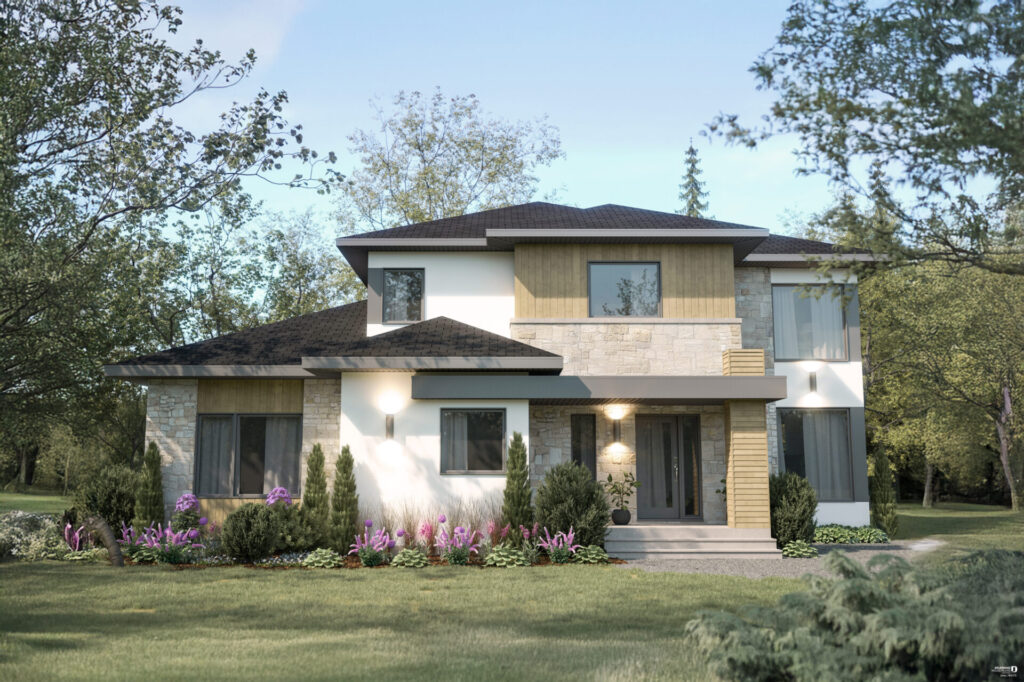
A unified look: one coherent façade, not two homes stuck together
A “unified look” (a harmonious façade) is a true must-have:
- more upscale curb appeal
- stronger resale value
- no “add-on” or “annex” effect
How to achieve a uniform exterior
- Keep the same architectural language: materials, lines, window rhythm, roof pitch.
- Make the secondary entrance discreet but high-quality: instead of copy-pasting a second front door, integrate it into the design.
- Maintain one readable volume: avoid additions that feel like an improvised extension.

Kitchen and bathroom: the real comfort drivers
These rooms determine the level of independence. A multi-generational setup can be more or less autonomous depending on the needs.
Kitchen: full or mini?
- Full kitchen = total independence, strong resale/rental potential +++
- Kitchenette = fine for visits or short stays, less comfortable long-term
Bathroom: accessibility and safety
If the unit is for a parent:
- curbless shower (or ready to adapt)
- planned grab bars (wall reinforcements)
- wide circulation space
- good lighting + slip-resistant finishes
Even if it’s not needed today, planning adaptability is cheaper on paper than renovating later.
Storage: the overlooked factor that changes everything
A secondary unit without enough storage quickly feels “too small,” even if the square footage is decent.
Essential storage zones
- entry (coats, boots)
- kitchen (pantry or equivalent)
- linen/cleaning supplies
- seasonal storage (basement, closet, dedicated area)
Tip: plan separate storage zones even in shared spaces (e.g., two distinct sections in the basement).
Flexibility: think about “later” (resale, rental, family evolution)
A multi-generational home isn’t static. Life changes, and your floor plan should stay practical and financially smart.
Flexible design (highly recommended)
- a unit that can become: a rental suite, professional office, teen space, guest suite
- separate meters or future-ready rough-ins (depending on local regulations)
- the ability to lock/unlock an internal connecting door, if one exists
👉 A good multi-generational plan is one that works:
- today
- in 5 years
See more multigenerational house plans
Conclusion
The secret to a successful multi-generational home is designing two true “homes” within one coherent, harmonious whole.
When privacy is protected, shared spaces are well planned, and the exterior remains unified, you get a project that’s:
- comfortable day to day
- enjoyable for the whole family
- more future-proof
- and often more profitable long-term