

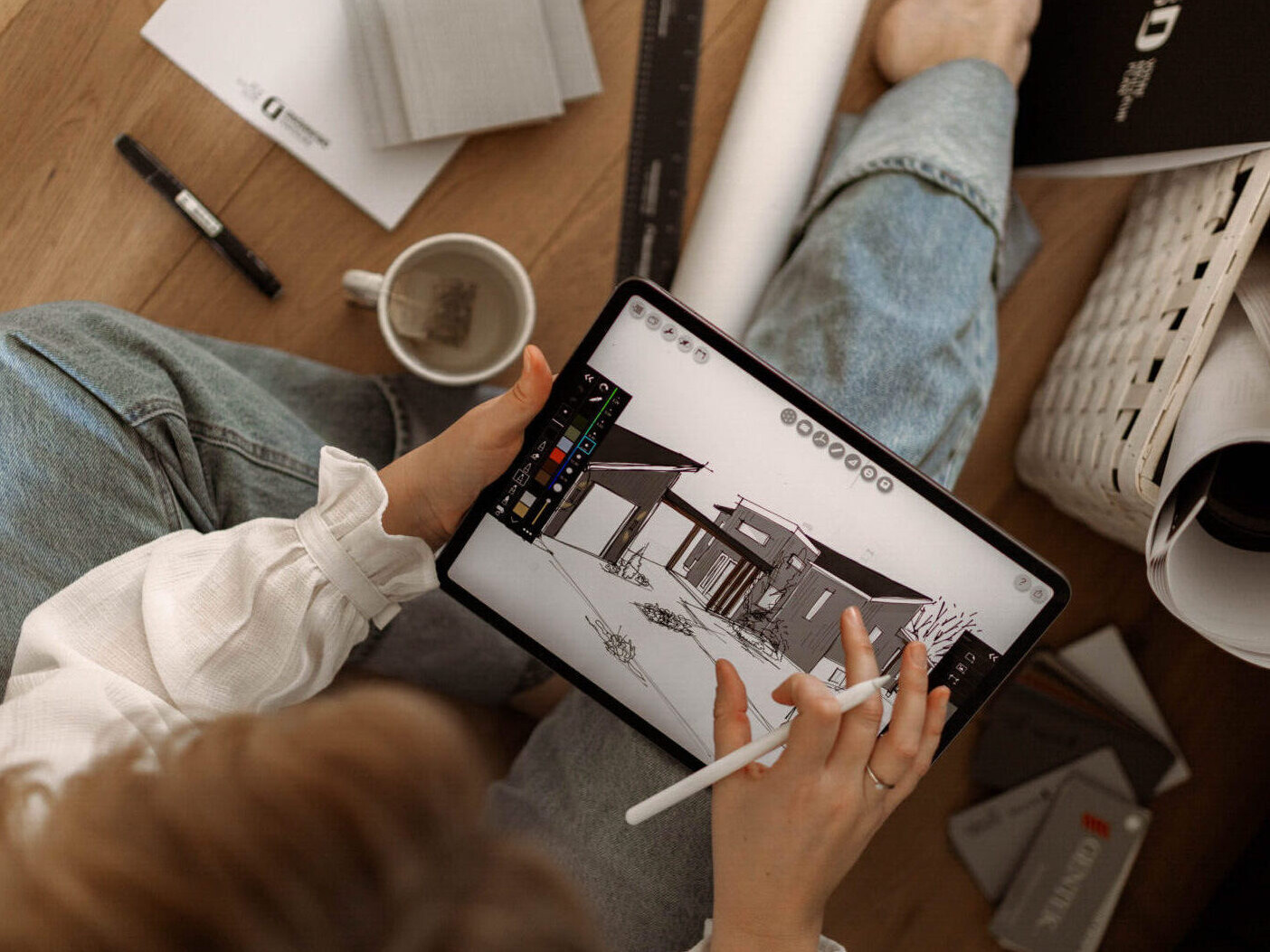
You’ve just received the preliminary plans for your future home? Congratulations, this is such an exciting step!
But before you move on to the final validation stage, there are a few critical elements to check to avoid surprises later… and to make sure this plan truly reflects your lifestyle and needs.
Here’s a simple and useful checklist, designed especially for future homeowners who may not be used to reading architectural drawings.
1. Are your basic needs covered?
Before diving into the technical details, take a step back and revisit the essentials:
- Does the number of bedrooms suit your current (and future) needs?
- Are there enough bathrooms for your household?
- Is there a space planned for working from home, a playroom, or a workshop if needed?
Your plan should fit your reality now and in the years to come. It’s much easier to adjust a plan at this stage than to deal with regrets once construction is underway. To better understand how a home can be fully tailored to your needs, explore our Custom House Plans Online guide.
💬 Want to design your dream house plan? Get a free estimate for a custom plan tailored to you.
2. Is there enough storage?
Storage is one of the most commonly overlooked features… until you move in and realize what’s missing.
Things to look for:
- Bedroom closets (size and quantity)
- Entry storage (mudroom, coat closet, etc.)
- Kitchen pantry or additional kitchen storage
- Basement, garage or hallway storage space
🔍 Pro tip: Picture a typical day, where do the coats, luggage, holiday decorations, and sports gear go?
3. Does the plan match your foundation?
This is a technical check to complete with your architectural technician or designer:
- Is the layout compatible with your chosen foundation type (crawl space, slab, full basement)?
- Are stairs, openings, and load-bearing walls correctly placed relative to the foundation plan?
It might not be the most exciting part of the process, but it’s critical to avoid costly changes during construction. 🧱
See the types of foundation available
4. Are the room sizes compatible with your furniture?
A 15’ x 15’ living room might seem spacious… until you try to fit your sectional sofa, media unit, and bookshelves.
Take time to compare room dimensions with the furniture you already have.
💡 Tip: Measure your furniture and compare it to the plan using a scale ruler or design app.
Same goes for hallways, clearances around doors, and circulation space around a kitchen island. 📏
5. Are there any municipal regulations you should be aware of?
Before you fall in love with a layout or façade, make sure the plan complies with local zoning and building regulations:
- Required setbacks
- Maximum building height
- Permitted exterior finishes
- Distance between windows and neighboring properties
- Garage orientation rules, and more
Each city or town has its own rules, so it’s always best to check before submitting for a permit or purchasing land. 🏘️
6. What about sun orientation?
This might seem secondary, but how your house is positioned on the lot can make a huge difference in terms of natural light, energy usage, and comfort.
Ask yourself:
- Will morning light reach the kitchen or bedrooms?
- Will the living room receive natural light in the evening?
- Is the terrace facing south (too hot in summer) or shaded (too cool)?
💡 Sometimes a simple rotation of your floor plan can have a major positive impact at zero additional cost.
Curious about designing a home that maximizes sun exposure and eco-efficiency? Explore our special collection of eco-friendly house plans!
Discover our eco-friendly house plans
7. And all the little things we tend to forget…
Here’s a quick list of small, but important details worth checking:
- Is the washer/dryer location practical and accessible?
- Is the main entrance covered and weather-protected?
- Is there easy access to and from the garage?
- Are the bedrooms far enough from noisy areas?
- Does every bathroom and powder room have a window?
Take your time. Ask questions. Don’t hesitate to seek support ! This is the best moment to ask for adjustments and make sure everything truly works for you.
Our team is here to help you modify any of our existing plans or create your custom layout from scratch.
In Summary
A preliminary house plan is like the skeleton of your future home. It deserves your full attention so take the time to review, ask, and refine.
Ready to move forward with your dream project? Our team is here to help : reach out to one of our 31 offices across Quebec and Ontario.